3 Days in Split: The Perfect Itinerary
Three days is the sweet spot in Split. It's long enough to see the Roman city properly, get a beach morning, watch a sunset from the hill and still take a boat somewhere, without any of it turning into a route march. The mistake most people make isn't running out of time, it's spending all three days inside the same 400 metres of Old Town and never seeing the coast that starts a mile away. This is the plan we give friends who come to visit: what to do each morning, afternoon and evening, in an order that works with the heat, the light and the ferry timetables. If you're still deciding on length, our guide to how many days you need in Split is the place to start.
By Ante Elez
First, How Split Is Laid Out
Split is really two cities stacked against each other. There's the historic core, a dense pedestrian knot of Roman walls, marble lanes and squares that you can cross in ten minutes, and then there's everything west and south of it: Marjan Hill, a string of beaches, the viewpoints and the coastal road, spread over several kilometres.
This itinerary alternates between the two on purpose. Every day has something in the compact centre and something out along the coast, which keeps the walking sensible and means you never spend a whole day in the crowds or a whole day on a bus. The ferry port and the bus and train stations all sit within a few minutes of the Riva, which makes the third day much easier than it would be in most cities.
Day 1, Morning: Inside Diocletian's Palace
Start early, ideally by eight. The palace is one of the best preserved Roman buildings on earth and it is also, unusually, still a living neighbourhood, with 3,000 people in flats built into the emperor's walls. Our complete guide to Diocletian's Palace covers the tickets, the timings and what's free. Before nine it belongs to residents, delivery vans and cats, and you can stand alone on the Peristyle. By eleven that is not remotely true.
Work through the Peristyle, the domed Vestibule, where klapa singers use the acoustics most days, and then down into the underground cellars, which held the palace's storerooms and now feel like the vaults of an enormous castle. Add the Cathedral of Saint Domnius and, if nobody in the group minds heights, the bell tower, which has the sharpest view in the centre and a steep, partly open staircase to get there.
- Be inside the palace by 8am to beat the crowds and the heat
- The cellars, cathedral and bell tower each have a small entry fee
- The bell tower stairs are steep and open, not for vertigo
- Allow three hours to do the whole quarter properly
Day 1, Midday: The Markets, Varoš and a Long Lunch
Walk out through the eastern gate to the Pazar green market and the covered fish market, both busiest and best in the morning. They are the most authentically local half hour in the city centre, and both are free. Then cut west into Veli Varoš, the old fishermen's and stonemasons' quarter climbing the slope below Marjan, where the lanes are narrow, the shutters are green and the tourists thin out within a block.
Eat here rather than on the Riva. A konoba two or three streets back from the water charges less and cooks better, and lunch in Dalmatia is not a rushed meal. Order the grilled fish of the day, or black risotto if you want the local classic, and give it an hour and a half. Our guide to where to eat in Split explains how fish is priced and what else to look for.
Day 1, Late Afternoon: Get the Lay of the Land
This is the slot that quietly makes or breaks a three day trip. By mid afternoon you've seen the Roman city, the heat is at its worst and the natural instinct is to keep wandering the same lanes. The better move is to go up and out, and get a sense of the whole shape of Split before you start planning days two and three around it.
An hour or two on the hill and the western coast does exactly that: Vidilica and the Marjan lookouts, Sustipan, the marina, the coves at Kašjuni, the west coast promenade. It's the half of the city most visitors never reach, and seeing it on day one means you spend the rest of the trip going back to the bits you liked rather than discovering them on your last afternoon. Our 80 minute Classic Tour is built for precisely this, and the 120 minute See Everything Tour goes further along the coast if you'd rather do it all in one go.
Day 1, Evening: The Riva and Your First Dalmatian Dinner
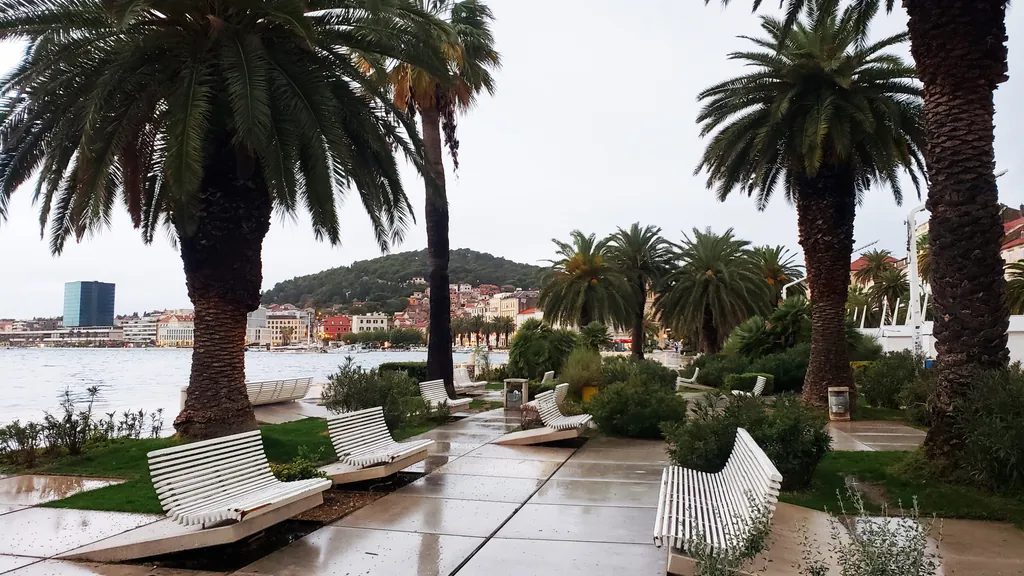
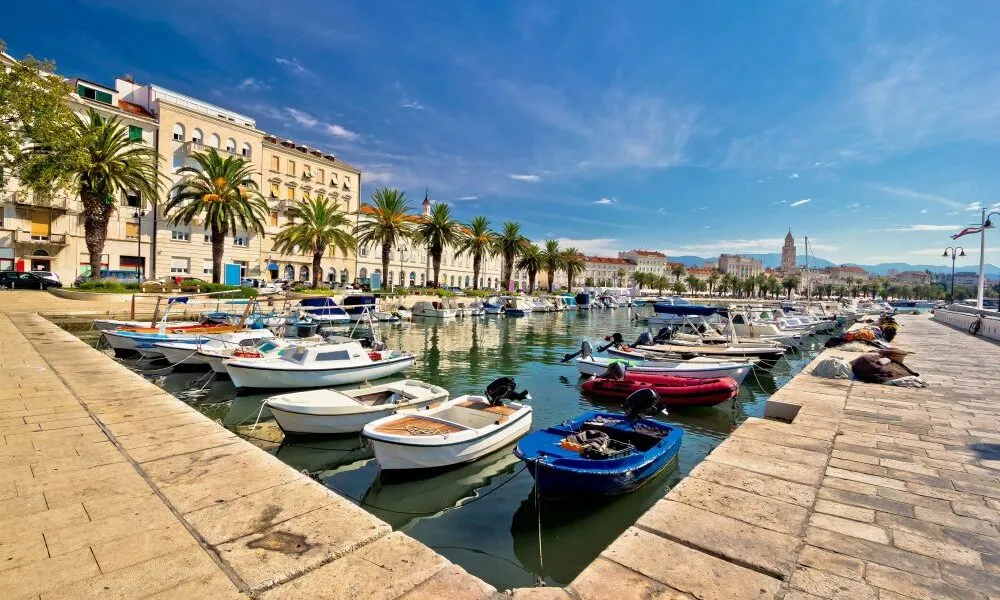
Come down for the evening promenade. From about seven, the whole city walks the length of the palm-lined Riva, meets friends, drinks coffee slowly and shows no interest in going anywhere. Joining in is one of the nicest free things you'll do all week, and the palace walls lit up behind it are worth the walk on their own.
Croatians eat late, so a table at half past eight is normal and half past nine is not unusual in summer. Book if you have somewhere specific in mind, because the good places in the centre fill up in season. Our guide to Split at night covers where to go afterwards.
Day 2, Morning: A Proper Beach Morning
Go early again, before the sun gets serious. If you want easy, Bačvice is a flat 15 minute walk from the Riva, famously shallow, and the home of picigin, the local game of keeping a small ball airborne in ankle deep water. If you want beautiful, head west to Kašjuni on the southern side of Marjan, where the water is clear and deep and the pines come almost down to the pebbles.
Take water shoes. Split's beaches are pebble and rock rather than sand, and they're much more comfortable with something on your feet. The best beaches in Split guide runs through the rest, including the quieter local ones east of the centre.
Day 2, Afternoon: Marjan, Slowly
Spend the afternoon on the hill, where the pine shade makes the heat manageable. The Meštrović Gallery sits on Marjan's southern slope in the villa the sculptor built for himself, with sea views from the garden, and the Kaštelet chapel a few hundred metres along holds his carved cycle on the life of Christ.
From there you can walk the forest paths towards the hermit chapels on the southern cliffs, or push on to Telegrin, the 178 metre summit, for the widest panorama in Split. Our complete Marjan Hill guide covers timings and routes for all of it.
Day 2, Evening: Sunset, Then Somewhere Local
Pick a viewpoint and be there 40 minutes before the sun goes down. Vidilica gives you the city and the harbour, Sustipan is a flat 25 minute walk from the Riva with a neoclassical gazebo and almost no crowd, and the western Marjan lookouts face straight out to the islands. The best viewpoints in Split guide compares them properly.
Afterwards, either the Old Town bar lanes or Bačvice, depending on the mood of the group. Bačvice has the beach bars and the late crowd. The palace lanes have small places tucked into Roman doorways where you can hear yourself talk. Matejuška, the little fishermen's harbour at the western end of the Riva, is where locals sit on the stone with a bottle and watch the boats, and it costs nothing at all.
Day 3, Option A: An Island Day
Split is the gateway to the Dalmatian islands and the ferry port is a five minute walk from the Old Town, so this is far easier than it sounds. Supetar on Brač is the simplest, about 50 minutes on the car ferry, with buses on the other side to Bol and the famous Zlatni Rat beach. Hvar Town is the glamorous choice by fast catamaran. Šolta is the quiet one, closest to Split and barely touched by day trippers.
Book ahead in July and August, especially the catamarans, which sell out on peak weekends. Check the return sailing before you go rather than after you arrive, since the last useful boat back is often earlier than people assume.
- Brač: about 50 minutes, easiest with a car ferry and frequent sailings
- Hvar: fast catamaran, book in advance in high season
- Šolta: closest and quietest, good for a half day
- Always check the last boat back before you commit to a plan
Day 3, Option B: Stay on the Mainland
If boats aren't your thing, or the wind is up, the mainland options are just as good. Trogir is a walled Venetian town on its own little island 30 kilometres west, reachable by bus or by a slow boat from the Riva, and its old core is a UNESCO site you can see in an afternoon.
Klis Fortress sits in the pass above the city, half an hour away on a local bus, with a view straight down over Split and the sea, and a fair amount of Game of Thrones filming behind it. Krka National Park, with its waterfalls and boardwalks, is a longer day at roughly an hour and a half each way and is best done as an organised trip or with a hire car.
Day 3, Evening: The Last Night
Save something for the final evening rather than collapsing into whatever is nearest to the hotel. Book a konoba properly, order peka if you can find somewhere that does it, which usually needs a day's notice, and finish with a glass of local rakija that someone's grandmother apparently made.
Then take one last walk through the palace after ten, when the day trippers have gone, the stone has cooled and the lit lanes are almost empty. It's the version of Split people remember.
If You Only Have 2 Days
Cut day three and nothing else. Two days gives you the palace, a beach morning, Marjan and two evenings, which is a genuinely good trip. Skip the island rather than compressing everything, because a rushed island day tends to be four hours of travel for two hours of beach.
If you're on an even tighter schedule, our one day in Split itinerary is written for cruise passengers and anyone with a single day ashore.
If You Have 4 or 5 Days
With four days, add a second island or give a whole day to Marjan and the coves rather than half of one. With five, base yourself in Split and treat it as the hub it actually is: Krka one day, Trogir and the coast another, and a proper lazy day where the only plan is a beach and a long lunch. And if you only have two days rather than three, our 2 days in Split itinerary keeps the best of this plan without the island.
Extra days are also when the hidden gems become worth chasing, from the cliffside chapels to the quiet local beaches east of the centre that no guidebook bothers with.
Practical Notes for a Three Day Trip
A few things that make the difference between a smooth three days and a hot, disorganised one. Most of them come down to timing rather than money.
- Do the sightseeing before 11am and after 5pm in summer
- Stay within 15 minutes of the Old Town, the centre is where everything starts
- Cash is still handy at markets, cards work almost everywhere else
- Book ferries, restaurants and tours ahead in July and August
- Comfortable shoes, the marble lanes are polished and slippery when wet
- Refill water bottles at the public fountains around the centre
The One Thing Worth Getting Right
If we could give a visitor one piece of advice for a three day trip, it would be to get out of the Old Town on the first afternoon. The palace is extraordinary and it will still be there tomorrow. The viewpoints, the hill and the coastline are what people are actually describing when they say Split was more beautiful than they expected, and they're the part that quietly gets skipped when the days fill up.
It's why we run tuk tuk tours in the first place: open-sided, small, able to get up Marjan and along the narrow coastal roads, with a local guide who knows which lookout catches the light at that hour. If you'd rather build a route around your own list, tell us what you want to see and we'll shape one around it. If you'd like to see how that compares with everything else on offer, our honest guide to the best tours in Split ranks every option, ours included.
- Covers the spread-out half of Split in an hour or two
- No uphill walking in the midday heat
- Private rides, so the group keeps its own pace
- Pick-up in the Old Town, close to where you're staying
Final Thoughts
Three days in Split works because the city is small and the good stuff is close. History in the morning, sea in the middle of the day, a hill at sunset, dinner late. Do that three times in a row, vary the beach and take a boat somewhere on the last day, and you'll have seen more of Dalmatia than most people manage in a week.
For the details underneath this plan, our guides to the best things to do in Split, getting around the city and the best time to visit fill in the gaps.