Split vs Dubrovnik: An Honest Answer From Someone Who Lives in Split
This is the question every first trip to Croatia starts with, and most of the answers online are written by people who have been to neither, which is why they all conclude that both are lovely. Both are lovely. That is not much use when you have five days and one flight to book. So here is a straight answer from a city with an obvious interest in your choosing it. Dubrovnik is the more spectacular place to look at and Split is the better place to be, and which of those matters more depends entirely on the trip you're taking. Below is what Dubrovnik does better, where Split wins and by how much, what the cost difference actually is, and which one we'd tell a friend to book depending on who's going.
By Lovre Ostojić
The Short Answer
If you have two or three days in Croatia and want to see one extraordinary thing, go to Dubrovnik. The walled city is the single most impressive sight in the country and photographs don't really prepare you for the walk around the walls.
If you have five days or more, if you want to visit islands, if you're travelling with children, if the budget matters, or if you'd rather stay in a working city than a monument, go to Split. And if you have ten days or more, do both, but base yourself in Split and treat Dubrovnik as the trip you take from it rather than the other way round.
- Short trip, one great sight: Dubrovnik
- Longer trip, islands, family, budget: Split
- Ten days or more: both, based in Split
- The one thing nobody should do: two nights in each, in a rush
Our Bias, Declared
We run tours in Split, so we have a reason to want you here, and you should read everything below with that in mind. What we'd rather do than pretend otherwise is be accurate, because if you arrive expecting the wrong city you'll have a worse holiday and it won't be Dubrovnik's fault.
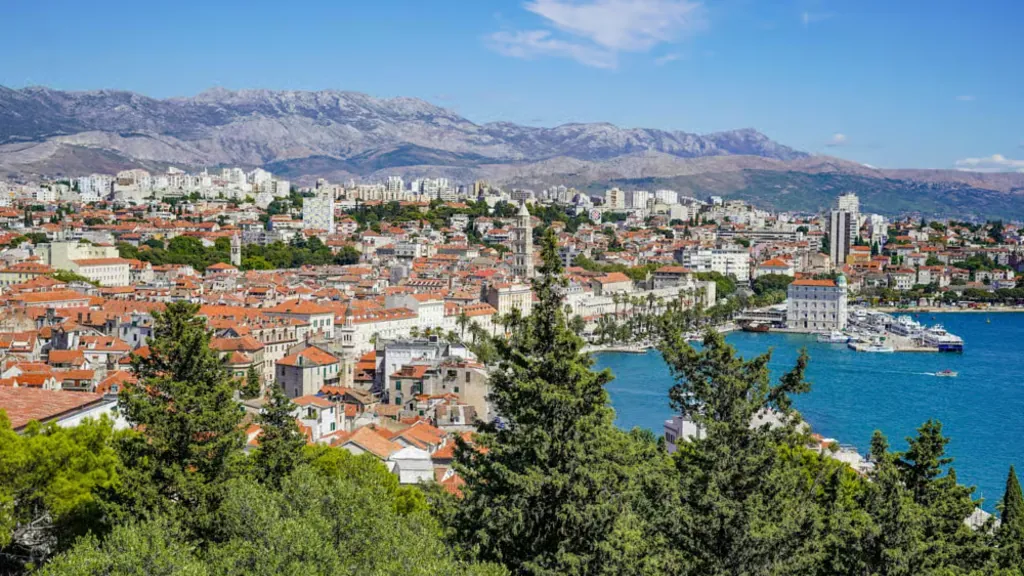
So, honestly: these two places are not really competing for the same trip. Dubrovnik is a small, perfectly preserved, extremely beautiful walled town of around forty thousand people at the southern tip of the country. Split is Croatia's second city, several times bigger, built inside and around a Roman emperor's palace, with a university, ferries leaving all day and people who live there all year. One is a masterpiece. The other is a place.
What Dubrovnik Does Better
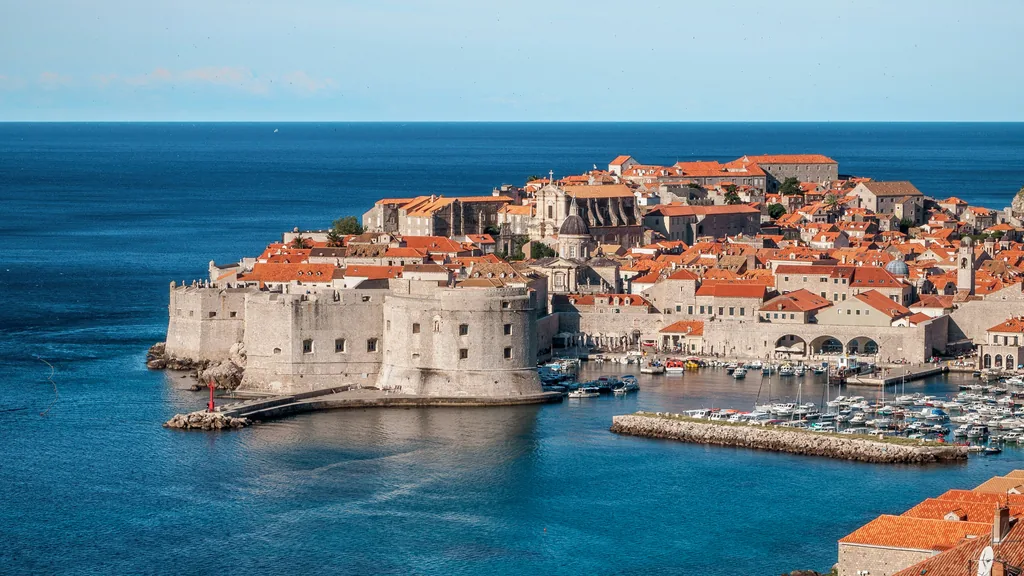
The walls. There is no equivalent anywhere in Croatia and few in Europe: a complete circuit of medieval fortifications you can walk all the way around, high above the roofs, sea on one side and terracotta tiles on the other. It takes a couple of hours, it's the best single thing either city offers, and it alone justifies the trip.
Dubrovnik's old town is also more coherent than Split's. It was planned, it's uniformly beautiful, the Stradun is one of the most beautiful streets in Europe, and everything inside the walls is stone of the same colour and century. Split's old town is a Roman palace that people never stopped living in, so it's a wonderful mess of Roman, medieval, Venetian and modern, with air conditioning units bolted to fourth century walls. If you want architectural perfection, that's Dubrovnik. It's also the more dramatic setting, sitting on a rock above deep blue water with mountains directly behind it.
- The city walls, the best single sight in Croatia, no contest
- A more beautiful and more coherent old town than Split's
- A more dramatic setting: cliffs, deep water, mountains behind
- Better for a short, high impact trip
What Split Does Better
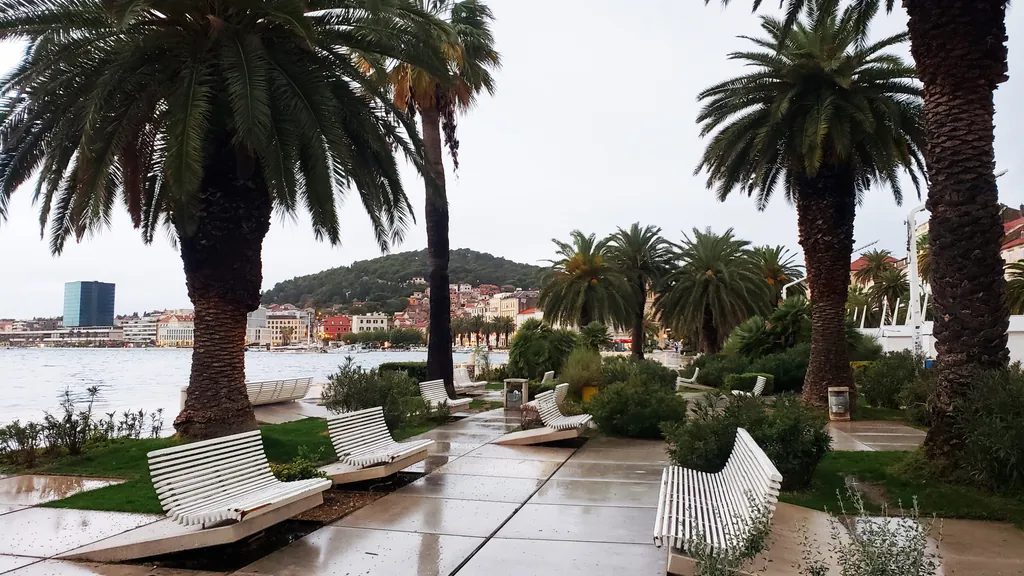
Split is a city people live in. That sounds like a small distinction and it changes the whole texture of a holiday. There are ordinary bakeries and ordinary bars, the market sells vegetables to people cooking dinner rather than souvenirs, children walk to school through the Roman gates, and the Riva at eight in the evening is full of locals rather than only visitors. Dubrovnik's old town has been losing permanent residents for years, and inside the walls in August that shows.
Practically, Split is also more useful. It's flatter, it's bigger so there's more of it to find, it has a proper beach within walking distance of the centre and a pine covered hill above it, and, the point that matters most, you can walk through the whole of Diocletian's Palace for free, because the lanes are public streets. The palace isn't a site you buy a ticket for, it's a neighbourhood. Our palace guide explains what's ticketed and what isn't.
- A working city rather than a preserved one
- The palace lanes are public streets, free to walk at any hour
- A beach and a forested hill within walking distance of the centre
- Much more to find beyond the obvious sights
The Cost Difference Is Real
Dubrovnik is the most expensive city in Croatia and it isn't close. Accommodation inside or near the walls in summer costs substantially more than the equivalent in Split, a coffee or a beer on the Stradun costs more than the same thing on the Riva, restaurants in the old town are priced for a captive audience, and the walls ticket is the most expensive single admission in the country by some distance.
Split isn't cheap in August either, nowhere on this coast is, but you get more for the money and you have alternatives. You can eat where locals eat five minutes from the palace, drink coffee at local prices one street back from the Riva, and stay outside the centre without exiling yourself, because the city is big enough to have normal neighbourhoods. Over a week the difference adds up to real money. Things to know before visiting Split has the practical costs.
- Dubrovnik is Croatia's most expensive city, especially for beds
- The walls ticket is the priciest admission in the country
- Split has cheaper options one street back from the tourist strip
- Over a week the gap is significant, not marginal
As a Base, It Isn't Close
This is the argument that decides most trips. Split is the ferry capital of the Adriatic, with catamarans and car ferries leaving the harbour all day for Hvar, Brač, Vis, Šolta and Korčula, and Hvar town about an hour away. The bus station, the train station and the ferry port are all next to each other at the end of the Riva, five flat minutes from the palace. The airport has far more connections than Dubrovnik's. Krka's waterfalls are about an hour inland, Trogir twenty five minutes, and Mostar and the Blue Cave are both doable in a day.
Dubrovnik has the Elafiti islands, Mljet, Korčula at a stretch, and excellent trips over the border into Montenegro and Bosnia. Genuinely good day trips, but fewer of them and mostly longer. If your picture of Croatia involves island hopping, that picture starts in Split. Our day trips guide lists what's actually within reach.
- Split: ferries all day to Hvar, Brač, Vis, Šolta and Korčula
- Port, bus and train stations together, five flat minutes from the palace
- Krka an hour away, Trogir twenty five minutes
- Dubrovnik's day trips are good but fewer, and mostly further
Crowds, and Where They Land
Both cities get cruise ships and both have busy middays. The difference is what happens to the crowd once it's ashore. Dubrovnik's old town is small and walled, so a few thousand extra people inside it is immediately and physically obvious. The Stradun and the wall circuit can become uncomfortable, and the city has spent years trying to manage it.
Split absorbs its crowds better because there's simply more city to absorb them into. The palace gets busy between ten and four and the rest of Split carries on as normal, and two streets off the Riva you can be alone. In both places the answer is the same, be out early, disappear in the middle of the day and come back after five, but in Split the crowd is a nuisance and in Dubrovnik in August it can be the thing you remember. Best time to visit Split sets out the year.
- Dubrovnik's walled town is small, so crowding is immediately obvious
- Split is big enough to absorb its day trippers
- In both: early morning and after five in the evening are yours
- Either city in late May or September is a different holiday
Food
Split wins, comfortably, and not because Dubrovnik cooks badly, because it doesn't. It's just that Split has a much larger year round population eating out on ordinary Tuesdays. This supports traditional konobas that rely on local regulars, lively green and fish markets right in the centre of town, and prices that aren't tailored solely for tourists. The core Dalmatian cooking is much the same in both places: grilled fish, black risotto, peka, pršut and olive oil, and it is exceptionally good.
Dubrovnik's advantage is at the top end, where it has more ambitious restaurants than Split does. Its problem is the middle, because inside the walls the ratio of tourist priced average food to genuinely good food is worse than anywhere else in Croatia, and you have to be more careful about where you sit down. Where to eat in Split has ours.
- Split: more restaurants supported by locals, better mid range value
- Dubrovnik: a stronger high end, a weaker middle
- Split has a working green market and fish market in the centre
- The regional cooking is the same, the pricing isn't
Beaches and Swimming
Split wins on access, Dubrovnik wins on water. Split has Bačvice, a sandy shallow city bay you can walk to from the old town, Žnjan a little further east, and the Marjan coves such as Kašjuni, which are the prettiest swimming near either city. All of them are within a few kilometres and none of them need a boat.
Dubrovnik's water is clearer and deeper and the setting more dramatic, but the beaches near town are smaller, busier and pebbly, and the best swimming means getting on a boat to the Elafiti islands. If you're travelling with small children who want to walk to the sea after lunch, that's a real difference. Our beaches guide covers the Split side and Split with kids covers the family side of it.
- Split: sandy, shallow Bačvice within walking distance of the centre
- Split: the Marjan coves are the best swimming near either city
- Dubrovnik: clearer, deeper water, but smaller and busier beaches
- Dubrovnik's best swimming needs a boat
Evenings
Split has a student population, a football club that half the city cares about, live music, bars in Roman cellars, and a Riva that fills up every evening with people who live there. The nights run late and they aren't put on for anybody.
Dubrovnik's evenings are lovely, and they're quieter and more expensive. Dinner, a drink at one of the bars on the rocks outside the walls at sunset, which is a wonderful thing to do, and then not a great deal. If nightlife is anywhere on your list, that settles it. Things to do in Split at night covers ours.
- Split: bigger, later, cheaper, and mostly local
- Dubrovnik: quieter and more expensive, but the cliff bars are superb
- Split's Riva after eight is the best free hour in either city
- For a young group, this alone decides it
Getting Between Them
They're about 230 kilometres apart along the coast, which is roughly four to four and a half hours by bus or car. Since the Pelješac Bridge opened you no longer cross into Bosnia and back on the way, which removed the two border checks that used to make the journey unpredictable. Buses run frequently through the season and are inexpensive, and the drive itself is beautiful, especially the stretch along the Makarska Riviera.
There are also catamarans in summer, which take a similar time but are seasonal and depend on the weather, and flights, which look quick until you add two airports to the total. If you're doing both cities, fly into one and out of the other so you never cover the same ground twice.
- About 230 km, four to four and a half hours by road
- No Bosnian border crossing since the Pelješac Bridge opened
- Seasonal catamarans exist but depend on the weather
- Fly into one and out of the other, and don't backtrack
Which One, By Who's Going
A family with young children: Split, without hesitation. Walkable beaches, flatter streets, more space, cheaper food and a hill to run around on. A couple after somewhere romantic for two or three nights: Dubrovnik is the more beautiful backdrop, although Split has its own case and costs considerably less. A group in their twenties: Split. Island hoppers: Split. Cruise passengers don't get to choose, but if you get a day in each, our one day Split itinerary is built for exactly that window. Repeat visitors to Croatia: Split, because there's more left to find on the second visit.
- Under three days: Dubrovnik. Five days or more: Split
- Families and groups: Split, clearly
- A short romantic break: Dubrovnik is prettier, Split is better value
- Islands, or a second visit to Croatia: Split
Doing Both
With ten days or more it's an excellent trip, and the shape that works is four or five nights in Split with an island and a national park from it, then the coast road south, then three nights in Dubrovnik with a boat to the Elafiti islands or a day in Montenegro. Fly home from Dubrovnik.
What doesn't work is two nights in each with a four hour bus in the middle, which is most of a week spent arriving and leaving. If you only have five days, pick one. How many days in Split goes through the arithmetic properly, and our three day itinerary is the one to follow if Split is the pick.
- Ten days or more: four or five nights in Split, then three in Dubrovnik
- Fly into Split and out of Dubrovnik, never backtrack
- Two nights in each is a week of packing, not a holiday
- Five days or fewer: choose one and stay put
What We'd Tell a Friend
Go to Dubrovnik once in your life, walk the walls early in the morning before the ships arrive, stay two or three nights, and understand that you're visiting a masterpiece rather than living in a town.
Then spend the rest of the trip in Split, because after three days here you'll know which café is yours, which ferry goes where and which beach to go to when the wind is from the north, and that's the thing people actually remember about a holiday. The islands leave from the end of the street. That's the case, and we'd make it even if we weren't from here.
If you do come, the parts of Split that are hardest to reach on foot, the viewpoints, the coast road and the coves on the far side of Marjan, are the parts most visitors miss entirely, and they're what our tours are built around.