2 Days in Split: The Perfect Itinerary
Two days in Split is a strange amount of time. It's more than enough to see the city properly and nowhere near enough to do the city and an island and a national park, which is what almost everybody tries. The result is a familiar sort of holiday: a five in the morning start for a boat, nine hours away from the city you came to see, and a last evening spent too tired to walk to dinner. This itinerary is built the other way round. One day for the old stone and the parts of Split that are spread out and uphill, one day for the sea and one relaxed half day of your choosing, and both evenings kept free. It's the plan we give friends, and it's the plan we'd follow ourselves.
By Lovre Ostojić
Is Two Days Enough for Split?
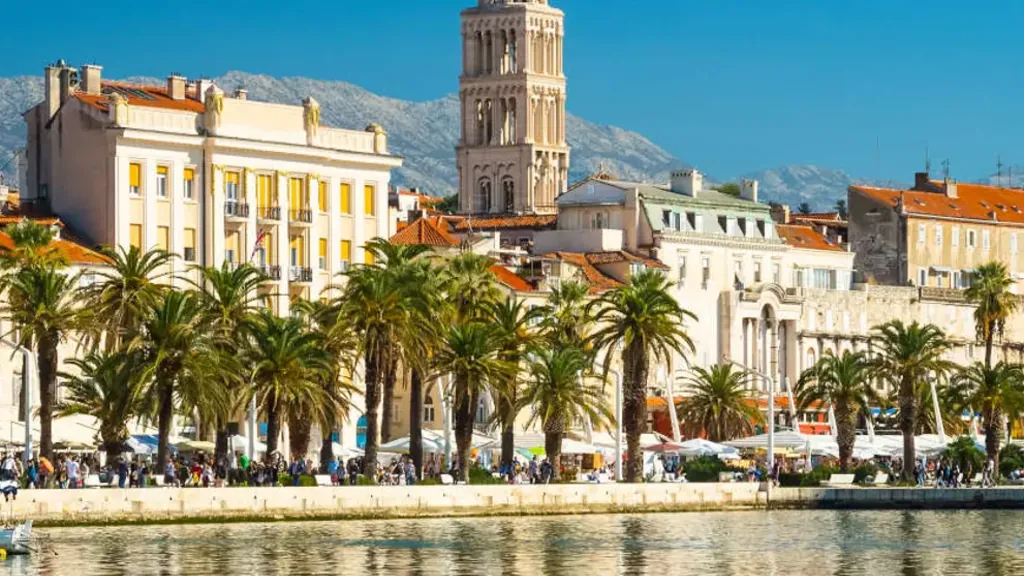
For the city itself, comfortably yes. Split is small, dense and walkable: the whole historic centre is about fifteen minutes end to end, the cathedral, the Peristyle and the palace cellars are all within a hundred metres of each other, and the best beaches and viewpoints are a few kilometres out rather than a day's excursion away. Two full days is enough to see all of that without rushing, and to eat two good dinners while you're at it.
For Split as a base, no. Two days is not enough for the city and Hvar, or the city and Krka, or the city and Plitvice - not because you couldn't physically do it, but because each of those swallows a whole day and leaves you with half a day for a 1,700-year-old Roman palace. If the islands are the reason you came to Dalmatia, give yourself four nights here, or make Split the short city stop it's very good at being.
- Two full days is plenty for the city, the viewpoints and a swim
- It is not enough for the city plus a full-day island trip
- The centre is about fifteen minutes end to end on foot
- Two nights means two dinners: book one of them
The Two-Day Rule: One Stone Day, One Sea Day
The structure that works is simple. Day one is the stone day: the palace in the morning, the market, and then the half of Split that sits above and beyond the walls - Marjan's viewpoints, the west coast, Sustipan - in the afternoon, finishing with sunset. Day two is the sea day: Marjan on foot if you've got the legs for it, a long swim, and an afternoon you can either spend on a half-day trip or spend doing nothing at all.
Keep the evenings loose. Split's best hours are between seven and eleven, when the day trippers have gone and the Riva fills up with people who live here, and every itinerary that schedules those hours ends up wasting them.
Day 1, Morning: Inside the Walls Before the Crowds
Be inside the palace by eight. This is the single piece of advice on this page that changes the trip most: between eight and ten the lanes are cool, empty and echoing, and you get the version of Diocletian's Palace that the cruise crowd never sees. Start at the Peristyle, the colonnaded square at the centre, then the cathedral and its crypt, then the substructures - the vast basement halls that held the palace up and now hold the market stalls.
After that, walk it without a map for half an hour. The palace is a lived-in neighbourhood rather than a monument, with washing lines and cats and doorbells, and wandering the lanes between the Golden Gate and the Silver Gate is the point of the place. Our complete guide to Diocletian's Palace has the full route, the details worth stopping for and what each ticket actually covers.
- Inside the walls by eight, before the tour groups arrive
- Peristyle, cathedral, crypt and substructures, in that order
- The bell tower is worth it, but the stairs are steep and open
- Grgur Ninski's toe is outside the Golden Gate, and yes, everyone touches it
Day 1, Late Morning: The Market, and a Coffee That Takes an Hour
Two hundred metres east of the palace is the Pazar, the open-air green market, and just off the Riva to the west is the Peškarija, the fish market, which has no flies because of a sulphur spring next door and no smell to speak of. Both are working markets rather than attractions, both are best before eleven, and both are free.
Then do the thing Split actually does: sit down for a coffee and stay there. Coffee here is a social institution measured in hours, not minutes, and the correct place is a table where you can see people passing. If you'd rather eat, this is the moment for burek or a slice of soparnik from a bakery instead of a sit-down lunch.
- Pazar for fruit, cheese, olive oil and pršut, best before eleven
- Peškarija fish market, five minutes west, worth a look even if you're not buying
- Coffee is an hour-long institution, not a takeaway
Day 1, Afternoon: The Half of Split You Can't Walk To
Here's the part that catches people out on a short trip. Everything above deals with an area you can cross in fifteen minutes. The things people photograph and remember - the panorama from Vidilica and Telegrin, Kašjuni beach under the pines, Sustipan's headland above the sea, the coastal road out past Meje, Poljud stadium, Villa Dalmacija - are spread over several kilometres of hillside and coast, and they are uphill. On foot, in August, that's most of a day and a lot of sweat. On a 48-hour trip you don't have a day to give it.
This is exactly the gap we built the tours around, and it's why the afternoon of day one is the right slot for one. An hour and a half on a retro tuk tuk tour covers the Marjan viewpoints, the west coast and the corners two-day visitors otherwise miss entirely, and puts you back in the centre in time to shower before dinner. The Classic Tour is the right length for this itinerary; the See Everything Tour is the one to take if you'd rather trade the beach on day two for more of the city. If you'd rather do it under your own steam, the places in Split you can't easily reach on foot explains what each one costs you in walking.
- The viewpoints and the coast are kilometres apart and uphill
- An hour and a half covers what a full day would on foot
- Best slot: mid to late afternoon, when the light turns
- Back in the centre with the whole evening still ahead of you
Day 1, Evening: Sunset First, Dinner Two Streets Back
Split faces west, which means sunset is the city's best hour and there are three good ways to take it. Vidilica, the terrace at the top of the Varoš steps, gives you the roofs, the harbour and the islands in one frame. Sustipan is flatter, greener and quieter, a park on a headland with the sea on three sides. Matejuška, the old fishermen's harbour at the end of the Riva, is where everyone sits on the concrete with a drink from the shop, and it's free and completely unpretentious. All three are in our guide to Split's best viewpoints.
Then dinner, and one rule: walk two or three streets back from the water. The seafront restaurants pay seafront rent and cook for people who will never come back. The konobas in Veli Varoš and the lanes north of the palace cook for people who might. Where to eat in Split has the specifics, and on a two-night trip this is the meal worth reserving a table for.
- Vidilica for the postcard, Sustipan for the quiet, Matejuška for the locals
- Sunset is roughly 8.30pm in July, 6pm in October - check before you plan
- Book one dinner ahead; walk-ins are fine for the other night
- Two streets back from the sea is the whole trick
Day 2, Morning: Marjan Properly, On Foot
If day one's afternoon showed you Marjan from the road, day two's morning is for walking into it. Go up the stone steps from Veli Varoš early, before the heat, past the little church of St Nicholas, to Vidilica for coffee with the whole city underneath you. From there a shaded path runs west along the ridge under the pines, past the medieval hermit chapels cut into the cliff, to Telegrin at the top.
Two hours gets you a proper walk; forty-five minutes gets you the first viewpoint and back. It's the closest thing Split has to a forest, it's full of joggers and dog walkers at seven in the morning, and it is the reason people who live here put up with the summer. Our Marjan Hill guide has the paths, the chapels and where the water fountains are.
- Start early: there is no shade on the steps
- Vidilica is twenty minutes up from Veli Varoš
- Telegrin, the summit, is another forty minutes along the ridge
- Take water; the fountains are further apart than you'd like
Day 2, Late Morning: The Swim
Come down the far side of Marjan and you're at Kašjuni, a curve of pebbles under the pines with clear water and a beach bar, and the best swim within reach of the centre. Bene, at the western tip, is shallower, greener and better with children. If you'd rather stay close to town, Bačvice is the famous city beach - sandy, shallow enough to walk out fifty metres, and the home of picigin, the local game of slapping a small ball in ankle-deep water that you will not understand and should watch anyway.
Whichever you choose, this is the middle of the day well spent. Our beaches guide ranks the rest, including the quieter ones on the far side of the hill.
- Kašjuni: the best all-round swim near the centre
- Bene: shallow, shaded, easiest with small children
- Bačvice: sandy, in the city, busy, genuinely fun
- Water shoes are worth it on every pebble beach here
Day 2, Afternoon: Pick One, and Only One
You have three honest options for the afternoon and none of them is a full-day trip. The first is Trogir: a walled UNESCO town on its own island thirty kilometres west, about an hour by local bus, and comfortably seen in three or four hours. The second is Klis Fortress, half an hour up the mountain on a city bus, with the best view over Split from anywhere outside it, and lamb on a spit at the roadside restaurants below. The third, and the one we'd actually pick, is nothing at all: another swim, a second coffee, an hour in the Ivan Meštrović Gallery, a wander through the Varoš lanes.
What you cannot fit is Hvar, Brač, Krka or the Blue Cave. Those are nine to eleven-hour days, and on a two-day trip one of them costs you half your holiday. Our day trips guide is honest about how long each one really takes, and the half-day section is the part to read.
- Trogir: about an hour each way, three or four hours there
- Klis: half an hour by bus, huge view, uneven stone, real shoes
- Islands and waterfalls: not on this itinerary
Day 2, Evening: The Long Last Night
Split's second evening is the one people remember. Start on the Riva when the light goes orange and the promenade fills up, take the Matejuška route west to watch the boats, and eat later than you would at home - nine is normal, ten is fine. Afterwards, the bars in the palace lanes are small and stone-walled and open late, Bačvice below the centre is where the noisier night happens, and if all you want is a glass of wine on a wall by the sea, nobody here will think that's strange.
Split at night covers where to go depending on what kind of evening you're after, including the quiet version.
If You Arrive Late or Leave Early
Very few two-day trips are actually two full days. If you land in the afternoon, do the palace that evening instead of the morning - it's beautiful lit up and nearly empty after nine - and shift day one's afternoon to the following morning. If you're leaving on an afternoon flight, use the last morning for Marjan or a swim, not for anything with a ticket queue.
Two practical notes. Luggage storage exists at the bus and ferry terminal, which is five minutes from the palace, so an early check-out doesn't have to cost you the day. And the airport is out past Trogir, roughly half an hour by shuttle bus from the centre in normal traffic and longer in August, which is worth knowing before you cut it fine; how to get around Split has the details.
- Arriving late: do the palace at night, it's better anyway
- Leaving early: Marjan or a swim, nothing with a queue
- Left luggage at the bus and ferry terminal, five minutes from the walls
- Allow extra time for the airport road in July and August
Two Days With Kids, In Winter, or In a Heatwave
With children, flip the days: swim in the morning while everyone is fresh, do the palace in the late afternoon when it's cooler, and cut the Marjan walk to Vidilica and back. Bačvice and Bene are the two beaches that work best with small ones, and things to do in Split with kids has the rest.
In winter the sea is out and the days are short, so both mornings go to the city and the afternoons to Klis, Trogir or the galleries; everything is quieter, cheaper and, frankly, quite lovely. In a genuine heatwave - and July and August now deliver several - treat midday as unusable: out early, in the water or in the shade from noon until five, out again in the evening. Best time to visit Split breaks the year down month by month.
The Mistake Two-Day Visitors Make
It is always the same one: booking a full-day excursion for one of the two days. The reasoning makes sense from home - you're in Croatia, the islands are famous, when will you be back - but the arithmetic doesn't. A Hvar day is roughly ten hours door to door, a Blue Cave day is eleven, Plitvice is three hours each way. Spend one of your two days like that and you've given Split itself an afternoon.
The regret we hear from guests is never about the island they missed. It's about the city they used as a bus stop and never actually saw. If you want the islands, stay longer - how many days do you need in Split sets out what each extra night buys you.
- A full-day trip costs you half of a two-day holiday
- The famous islands are nine to eleven hours door to door
- Half days exist: Trogir, Klis, Salona
- Nobody comes home wishing they'd spent less time in Split
What to Book Before You Arrive
Not much, and that's the pleasure of a short trip here. One dinner for the night you care about. Your afternoon on day one, because that's the slot everybody wants and the small tours fill up in season. Cathedral and substructure tickets you can buy on the day at the door. Buses to Trogir and Klis you simply turn up for.
If you'd rather have the afternoon shaped around what you actually want to see - a proposal, a photographer's light, a family with a grandmother who can't manage the hill - tell us what you're after and we'll build it. Otherwise the Classic Tour is the one that fits this itinerary as written. And if you're comparing the options first, our honest guide to the best tours in Split covers every way to see the city.
- Book: one dinner, and the day one afternoon
- Don't bother booking: buses, markets, beaches, viewpoints
- Cathedral and cellar tickets are sold at the door
- In July and August, book both a week or two out