Is Split Expensive? What Things Really Cost
Split is not the cheap Croatia of twenty years ago, and anybody who tells you it is has not bought a coffee on the Riva lately. It is also not Dubrovnik, and it is a long way from the prices of Paris, London or Zurich. What makes it confusing is that the same thing can cost twice as much a hundred metres apart, and that prices in August are not prices in May. So here are the real numbers for this year, from people who pay them: coffee, beer, lunch and dinner, taxis, ferries, beaches and tickets. We also say where visitors overpay, how to spend less without having a worse trip, and, since we run tours here, what we cost and when you should not spend the money on us.
By Ante Elez
The Short Answer
Split is moderately priced for Western Europe and noticeably cheaper than Dubrovnik. Food, coffee and public transport are fair. Accommodation in July and August, taxis, sunbeds and anything with a view of the sea are where the money goes.
As a rough guide, not counting accommodation, a careful traveller can manage on around 40 to 60 euros a day, eating at bakeries and markets and walking everywhere. A comfortable day, with a konoba dinner, a couple of drinks and one paid sight, is closer to 80 to 120 euros. Add a boat trip or a tour and a good dinner with wine, and 150 euros or more a day is normal.
The single biggest thing that decides what you pay is where you sit. Two streets back from the water, the same coffee, beer and lunch are often a third cheaper.
- Careful: around 40 to 60 euros a day, not counting accommodation
- Comfortable: around 80 to 120 euros a day
- With a boat trip or a tour: 150 euros or more
- Two streets back from the sea, prices drop
Why Prices Feel Confusing
Croatia switched to the euro at the start of 2023, and prices have risen quickly since. Many visitors arrive with memories or old blog posts from the kuna years and get a shock at the first bill. The old numbers are simply gone.
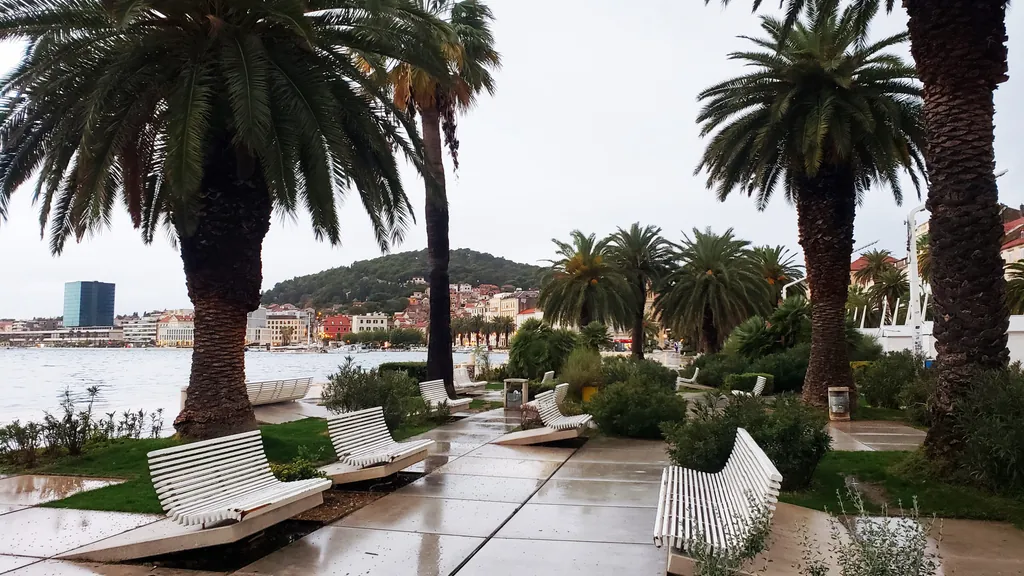
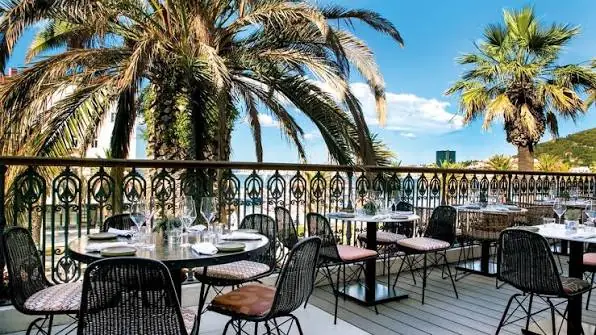
There are also two price levels in the centre of Split. Anything facing the Riva or the Peristyle charges for the view, and it is a real premium. A few streets back, in Veli Varoš, Varoš or behind the market, prices are closer to what locals pay. On top of that, prices move with the season: some restaurants and many beach services charge more in July and August than in May or October.
None of this is a scam. It just means that the price of your day in Split depends much more on where you choose to sit than on what you choose to eat.
- The euro arrived in 2023, and old kuna era prices are no guide
- The Riva and the Peristyle charge for the view
- Veli Varoš and the back streets are closer to local prices
- July and August cost more than May and October
Coffee, Drinks and Ice Cream
Coffee is the easiest way to see the two price levels. An espresso costs around 2 euros in a neighbourhood café and closer to 3 euros on the Riva. A cappuccino or a bijela kava, the local coffee with milk, is usually 2.50 to 4 euros. You can sit over one coffee for an hour and nobody will hurry you, which makes it the cheapest seat in the city.
A half litre of local beer, Karlovačko or Ožujsko, costs around 4 to 5 euros in an ordinary bar and 6 euros or more on the waterfront. A glass of house wine is around 4 to 7 euros, and a cocktail in a good bar 10 to 14 euros. A scoop of ice cream is around 2.50 to 3.50 euros.
The tap water in Split is safe and good to drink, and restaurants will bring you a jug if you ask. A big bottle of water costs well under a euro in a supermarket and two or three times that from a kiosk in the old town.
- Espresso: around 2 euros, closer to 3 on the Riva
- Local beer, half a litre: around 4 to 5 euros, 6 or more on the Riva
- Glass of house wine: around 4 to 7 euros
- Tap water is safe, so refill a bottle
Eating Out
The cheapest good meal in Split is breakfast from a bakery. A burek, flaky pastry filled with cheese or meat, costs around 2.50 to 3.50 euros and will keep you going until lunch. A slice of pizza is similar.
At lunchtime, look for marenda, the fixed daily lunch chalked on a board outside konobas in the back streets. Ten to fifteen euros for a proper plate of food is normal. A pizza in a restaurant is usually 11 to 16 euros. A konoba dinner with a starter, a main and a glass of wine is typically 25 to 40 euros a head, and more on the waterfront.
Two things catch people out. Fresh fish is priced by the kilo, not per portion, so a menu line reading 60 euros means 60 euros a kilo, and a whole fish for two can easily cost more than the rest of the meal. Ask them to weigh it and tell you the price before it is cooked. And some restaurants charge a small cover for bread. Both are normal here, just better to know in advance. Our Split food guide has the places we eat ourselves.
- Burek from a bakery: around 2.50 to 3.50 euros
- Marenda, the daily lunch: around 10 to 15 euros
- Konoba dinner with wine: around 25 to 40 euros a head
- Fish is priced by the kilo, ask for the weight and the price first
Supermarkets and the Market
If you are staying in an apartment, which most visitors to Split are, a supermarket will cut your food bill a long way. Konzum, Studenac, Tommy, Lidl and others are everywhere, and prices are similar to much of Western Europe. Bread, cheese, tomatoes, a bottle of local wine and some fruit for a picnic on Marjan will cost less than one lunch on the Riva.
For fruit and vegetables, go to Pazar, the green market outside the eastern wall of the palace, in the morning. Prices are per kilo, and in season the figs, tomatoes, cherries and strawberries are far better than anything in the supermarket. Bring cash, because the stalls prefer it.
- Supermarket prices are similar to much of Western Europe
- A picnic from the supermarket costs less than one lunch on the Riva
- Pazar is best, and cheapest, in the morning
- Bring cash to the market stalls
Getting Around
Most of Split is walkable, and walking is free. For longer trips, a city bus ticket costs a little over a euro if you buy it at a kiosk beforehand, and a bit more from the driver. The airport shuttle bus to the bus station by the ferry port is around 8 to 10 euros depending on the season.
Taxis are where transport gets expensive. The airport run usually costs somewhere between 30 and 45 euros depending on the season, the hour and the traffic. Uber and Bolt both work in Split, and a short ride across town is often 6 to 12 euros, more on a busy summer evening, so it is worth having both apps and comparing.
Do not rent a car for the days you are in the city. The old town is closed to traffic, parking in the centre is scarce and expensive in summer, and you will not need it. Our guide to getting around Split has the details.
- City bus: a little over a euro from a kiosk
- Airport shuttle: around 8 to 10 euros
- Airport taxi: around 30 to 45 euros
- Short Uber or Bolt ride in town: often 6 to 12 euros
Sights and Tickets
The best news in this article: much of Split's best sightseeing is free. Walking through Diocletian's Palace, its gates, the Peristyle and the central corridor of the halls underneath costs nothing, day or night. So do the Riva, Marjan Hill, the viewpoints, the markets and the public beaches. Our list of free things to do in Split has fifteen of them.
What you pay for are the individual monuments: the cathedral and its crypt and treasury, the bell tower, the Temple of Jupiter and the eastern and western halls under the palace. Budget somewhere around 15 to 25 euros a person to see everything ticketed in the palace, and less if you choose. Combined tickets sold at the cathedral usually save money. Museums such as the Meštrović Gallery or the Archaeological Museum typically cost somewhere between 5 and 15 euros, and Klis Fortress outside the city is in the same range.
- Walking through the palace is free, day and night
- Everything ticketed in the palace: around 15 to 25 euros a person
- Most museums: around 5 to 15 euros
- A combined cathedral ticket is usually cheaper than paying separately
Beaches
Beaches in Split are public and free. You can lay a towel on any of them without paying a cent. What costs money is comfort: on popular beaches like Bačvice, Kašjuni and Žnjan, a pair of sunbeds with an umbrella usually costs somewhere around 15 to 30 euros for the day in summer, and more at the smartest beach clubs. Earlier and later in the season, and later in the afternoon, it is often cheaper.
The best five euros you will spend is on a pair of water shoes, because the beaches are pebble and rock, and sea urchins live on the rocks. Our guide to the best beaches in Split says which beaches have shade from pine trees, which is free.
- Beaches are free, bring a towel
- Sunbeds and an umbrella: around 15 to 30 euros a day in summer
- Pine shade on Marjan beaches costs nothing
- Water shoes: the best five euros you will spend
Ferries, Boats and Tours
The cheapest way to see an island is the car ferry. A foot passenger ticket from Split to Supetar on Brač costs only a few euros, you do not need to book it, and it takes about fifty minutes. A catamaran seat to Hvar Town costs more, usually somewhere around 15 to 25 euros each way in summer, and it has to be booked ahead.
Tours cover a huge range. A tip based walking tour costs you the tip, usually 10 to 15 euros a person. A guided palace tour is around 20 to 30 euros. City tours on wheels, ours included, run from roughly 40 to 90 euros a person depending on length and what is included. A big boat island day is usually 50 to 90 euros, and a small speedboat day 100 to 150 euros or more. Our honest comparison of the best tours in Split says which ones are worth the money.
- Car ferry to Brač as a foot passenger: a few euros, no booking needed
- Catamaran to Hvar: around 15 to 25 euros each way in summer
- Walking tour: the tip, 10 to 15 euros
- Island boat day: 50 to 90 euros on a big boat, 100 or more on a small one
Where Visitors Overpay
Most overspending in Split comes from a handful of habits, and all of them are easy to avoid.
The first is sitting down on the Riva for everything. Have one coffee there for the view, and eat and drink the rest of the day a few streets back. The second is ordering fish without asking the weight. The third is taking an unmarked taxi or agreeing no price: use a licensed taxi with a meter or an app.
The fourth is cash machines. The brightly coloured independent ATMs all over the old town often charge high fees, and then offer to convert the money into your home currency at a poor rate. Use a cash machine attached to a bank, and whenever a machine or a card terminal asks, always choose to pay in euros. That one habit can save more than a dinner over a week.
- One coffee on the Riva for the view, the rest a few streets back
- Ask for the weight and the price before ordering fish
- Licensed taxis with a meter, or an app
- Use bank ATMs, and always choose to pay in euros
Accommodation and the Tourist Tax
Accommodation is the biggest cost of a trip to Split, and it depends almost entirely on the month. Most visitors stay in apartments rather than hotels, and the same apartment can cost twice as much in August as in May or October. The good central places sell out first, so for July and August, book months ahead.
Croatia also has a tourist tax, a small charge per person per night. It is usually already included in the price, or collected by your host, so check the booking to avoid a surprise at the door. Our guide to where to stay in Split compares the neighbourhoods, including the ones that are quieter and better value.
- The month decides the price more than anything else
- August can cost double what May or October does
- A small tourist tax per person per night, usually included
- Book central apartments months ahead for summer
Split Compared With Dubrovnik and the Islands
Split is noticeably cheaper than Dubrovnik. Coffee, food, rooms and above all sightseeing cost more in Dubrovnik, where walking the city walls alone costs more than most of Split's paid sights put together. Hvar Town in July and August is also pricier than Split, especially for drinks and beach clubs.
Inland, and in smaller towns along the coast, prices drop again. But for a city with this much to see, and with ferries to half of Dalmatia leaving from the old town, Split is good value. Our honest comparison of Split and Dubrovnik has more on how the two cities differ.
- Dubrovnik is more expensive for almost everything
- Hvar Town in summer is pricier than Split
- Smaller towns and the hinterland are cheaper
- For what it offers, Split is good value
What We Cost, and When to Save Your Money
We run tuk tuk tours here, so this is the part of the article where you should read most carefully. Our tours are priced per person, and the current prices are on each tour page. We are not the cheap option, and we do not pretend to be.
So here is the honest arithmetic. If two of you only want to see the Vidilica viewpoint, the cheapest way is to walk up the steps from Veli Varoš, which is free, or take a taxi, which is cheaper than a tour. If you are on a tight budget, walk up Marjan at seven in the morning. The view is exactly the same one.
What you pay us for is everything that walk does not include: the whole peninsula in one go, the western lookouts, Kašjuni and Sustipan, a local guide who knows what you are looking at, stops where you want them, a roof over your head, and an ice cold drink on every tour. There are no extras on top. It makes most sense if you have a short time in Split, if somebody in your group cannot manage the hills, or if it is August and walking up is not how you want to spend a morning.
- Our prices are per person and on each tour page
- On a tight budget, walk up Marjan early, it is free
- A tour buys the whole peninsula, a guide and the stops, in one go
- An ice cold drink on every tour, no extras on top
Ten Ways to Spend Less in Split
None of these make your trip worse. Most of them make it better.
- Have breakfast from a bakery, not a café menu
- Eat marenda at lunchtime in the back streets
- Refill a bottle from the tap, the water is good
- Have one coffee on the Riva, then move a few streets back
- Walk the palace for free and pay only for what you really want to see inside
- Take the car ferry to Brač instead of a catamaran or a boat tour
- Swim on the free beaches and sit in the pine shade
- Use bank ATMs and always pay in euros
- Come in May, June, September or October rather than August
- Walk up Marjan early in the morning, it is free and the best view in the city
What We Would Tell a Friend
Split is not cheap, but it is fair, and almost all of the difference between an expensive trip and a reasonable one is in a few choices. Sit a few streets back from the sea. Eat marenda for lunch. Ask the price of the fish. Pay in euros. Come outside August if you can.
And spend the money you save on the one thing you will remember. For most people that is a day on the water. For some it is a long dinner in a konoba, and for some it is seeing the whole city in one afternoon with us. Whatever it is, choose it on purpose, rather than letting the Riva decide for you.