Split Cruise Port: Where You Dock, What Is Walkable, and How Long You Really Have
Split is one of the easier ports on this coast and one of the most misjudged. The good news is that you walk off the ship and into the city, with no shuttle, no taxi and no transfer, and the old town is a few minutes away along a flat waterfront. The less good news is that almost everything people picture when they picture Split, the viewpoints over the harbour, the pine covered hill, the coves with the clear water, sits well outside that few minutes, up a hill, and a lot of people go home having seen one Roman courtyard and a lot of souvenir shops. This is the practical guide: where your ship ties up, how long the walk really takes, what fits into four hours and what does not, and the handful of things that catch people out every season.
By Ante Elez
The Short Version
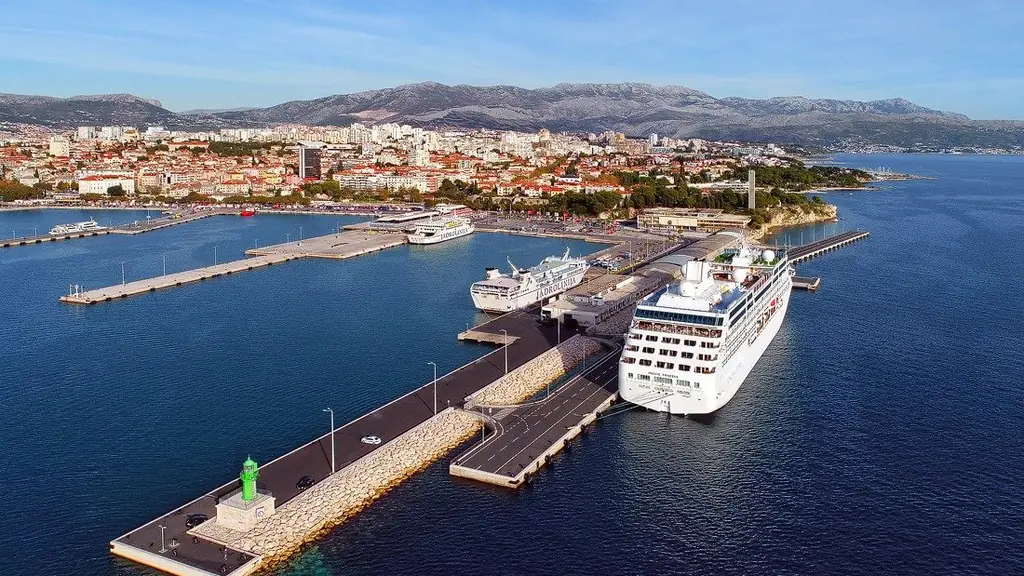
Split's passenger port is in the city, not outside it. You disembark onto a working quay in the same basin the island ferries use, and the walk to the edge of the old town is flat and takes under ten minutes for most people.
Diocletian's Palace, the Riva and the markets are all inside that walkable circle. The viewpoints, Marjan, the west coast and the good swimming are not, and no amount of optimism makes them so.
If you have four hours or fewer, either commit to the old town on foot and do it properly, or get wheels and see the whole city. Trying to do both on foot is the mistake we watch people make every single morning.
And whatever you do, be back at the gangway before the all aboard time rather than at it, because that is the only thing on this page that can genuinely ruin your day.
- You walk off the ship straight into the city, no shuttle needed
- Under ten minutes, flat, from the quay to the old town
- The viewpoints and the coast are outside walking distance, all of them
- Four hours or fewer: pick the old town on foot, or the whole city on wheels
Where Your Ship Actually Ties Up
Split's passenger port sits at the eastern end of the Riva, in the same harbour basin the catamarans and car ferries work out of. That is why the port feels busy in a way that a purpose built cruise terminal does not: you come ashore into a genuine transport hub with island ferries loading beside you.
Most cruise ships berth on the main passenger pier. From there you are on the waterfront immediately and the old town is a straight walk west along the harbour. Some of the largest ships go to the outer berths further from the centre, which adds a walk of several minutes along the quay before you reach the same waterfront, and on those days there is usually a shuttle to the end of the pier.
The single most useful thing you can do the night before is find out from the ship which berth you are on, because the answer changes your morning by up to twenty minutes in each direction, and twenty minutes each way is a viewpoint.
- The port is in the city, in the same basin as the island ferries
- Main pier: you are on the waterfront as soon as you are ashore
- Outer berths add several minutes of quay before the waterfront
- Ask the night before which berth you are on, it changes your plan
The Walk From the Gangway
From the main pier, allow about ten minutes to the eastern edge of Diocletian's Palace at an ordinary walking pace, and about fifteen to the middle of the old town, which is as far as the old town goes. The whole walk is flat, paved and along the water, with no steps and no climbing.
The bus station, the train station and the ferry terminal are all clustered at the same end, which is why Split works so well as a port. Everything arrives and leaves from one place, five flat minutes from a Roman palace.
Two things slow the walk down more than distance does. The first is disembarkation itself, which on a full ship can add half an hour before you are even on the quay, and that time comes out of your day and not the ship's schedule. The second is the same walk in the other direction at four in the afternoon in August, in full sun, with no shade on the quay, which is not the same walk at all.
- Main pier to the palace: about ten flat minutes on foot
- No steps, no hills, all of it along the water
- Buses, trains and ferries all leave from the same spot
- Disembarkation can eat half an hour, so count from the gangway
Tender Days, and Why They Are Rare Here
Split is an alongside port for the great majority of calls, which means you walk off rather than being tendered in, and that is a real advantage over several other stops on a typical Adriatic itinerary.
It is not guaranteed. Very occasionally a ship anchors and tenders passengers in, usually because of berth congestion on a busy day rather than the weather. If that happens, build in an extra thirty to forty five minutes each way and treat the day as if it were an hour shorter than the schedule says, because the queue for the last tender back is where people lose time.
The other thing that shortens a Split day without warning is the strong northeasterly wind, the bura, which occasionally makes berthing or tendering awkward in winter and the shoulder months. It almost never cancels a call here, but it can delay one.
- Nearly always alongside, so you walk straight off
- Tender days happen occasionally, usually from berth congestion
- On a tender day, treat the call as an hour shorter than scheduled
- The bura can delay a call in winter, it rarely cancels one
What You Can Genuinely See on Foot
The walkable circle in Split is small and it is excellent. Inside it are Diocletian's Palace with its cellars and the Peristyle, the cathedral and its bell tower, the Riva, the green market and the fish market, the Golden Gate with the Gregory of Nin statue, and Republic Square.
Two hours does the palace properly if you keep moving. Three hours does the palace and the markets with a coffee in the middle. Four hours does all of that at a civilised pace with lunch, and at that point you have seen the whole of walkable Split and you are looking for something else to do.
The part worth understanding is that the palace is not a museum you queue for. The lanes are public streets, so most of it is free and open at any hour, and only certain parts are ticketed. Our palace guide sets out which is which, and on a port day that distinction saves you both money and queueing.
- Two hours: the palace. Three: the palace and the markets
- Four hours on foot covers everything walkable, with lunch
- Most of the palace is public street and free to walk
- Only certain parts are ticketed, so know which before you queue
What You Cannot Reach on Foot
This is the part that decides most port days and it is worth being exact about. The Vidilica terrace, which is the classic view down over the palace and the harbour, is a climb of several hundred stone steps from the old town. People do it. In July, at midday, in deck shoes, having already walked for two hours, most people should not.
Beyond Vidilica, the ridge road running west along Marjan has a series of lookouts with the open sea and the islands in front of them, and they are kilometres rather than metres from the ship. Kašjuni and the coves on the south side of the hill are further still. Sustipan, the flat pine covered promontory west of the centre, is closer and is the one genuinely reachable walk of the group, at about twenty minutes each way.
Poljud, the west coast road, Žnjan, and the beaches east of Bačvice are all outside the circle too. None of this is dramatic distance by car and all of it is too far on a clock. We wrote a longer piece on exactly this problem, the places in Split you cannot easily reach on foot, and it was written with port days in mind.
- Vidilica is several hundred steps up from the old town
- The Marjan ridge lookouts are kilometres away, not minutes
- Sustipan, about twenty minutes each way, is the one walkable exception
- Everything with a view over Split involves either steps or a road
Four Hours, Six Hours, Nine Hours
Four hours is a city morning and nothing more. Walk in, do the palace, buy something at the market, have a coffee on the Riva and go back. Or spend ninety minutes of it on wheels seeing the viewpoints and the coast and the rest on foot in the old town. Do not attempt an island, do not attempt Trogir, do not attempt Krka.
Six hours is the sweet spot and the most common Split call. It fits the whole city comfortably: the palace with a guide, the viewpoints and the coast, lunch somewhere that is not on the Riva, and time to be back early. Six hours is also enough for Trogir and back if you would rather see a second town than the rest of this one, though we would not.
Nine hours or more, and you have real options, including a half day boat out to the nearer islands or a trip to Krka. Both eat almost the entire day, both depend on the schedule lining up, and both leave you with no margin. If your ship is in for nine hours and you are new to Split, our honest advice is still to give the day to Split, because you can swim, eat properly, see all of the city and still have an hour of nothing, which is more than most port days ever deliver.
Our shore excursions guide goes through the options by length, and the one day in Split itinerary is written as an hour by hour plan for exactly this.
- Four hours: the old town on foot, or the city on wheels, not both
- Six hours: the whole city comfortably, which is the best use of the day
- Nine hours: an island or Krka become possible, with no margin left
- On a first visit we would give even a nine hour call to Split itself
The Ship's Excursion or Your Own?
The honest case for the ship's excursion is one thing and it is a good thing: if the tour runs late, the ship waits. That guarantee is worth real money to some people and it is the whole product. The rest of it, the coach, the group of forty, the fixed pace, the commission built into the price, is the cost of that guarantee.
The case for booking independently is that it is usually cheaper, almost always smaller, and far more flexible, and that in Split specifically the risk the guarantee protects against is small. You are not driving three hours inland to a waterfall. You are in a city whose furthest interesting corner is fifteen minutes from your gangway by road. A local operator who works this port knows the all aboard times better than you do and is not going to strand you, because they would be out of business by August.
Where we would take the ship's version without arguing: a long inland trip to Plitvice or anything requiring several hours on a motorway. Where we would book independently: anything inside Split and anything within half an hour of it.
- The ship's excursion buys one thing: the ship waits for you
- That is worth paying for on long inland trips, less so in Split
- Independent is usually cheaper, smaller and more flexible
- Everything inside Split is fifteen minutes from the gangway by road
The All Aboard Time, and the Only Real Risk
All aboard is normally thirty minutes before departure, sometimes forty five, and it is printed on your card. It is the one hard number in your day and everything else should be planned backwards from it.
Work to a personal deadline an hour earlier than the real one. That hour is not paranoia, it is the buffer that absorbs a slow lunch, a queue at the cellars, a stubborn taxi and the fifteen minutes you did not budget for the walk back along an unshaded quay. If you are back early you will be sitting on the Riva with an ice cream, which is not a punishment.
One local wrinkle worth knowing. Split's waterfront closes to traffic for festivals, processions, concerts and, occasionally, Hajduk celebrations, and when it does, vehicles cannot approach the port from the west at all. It is rare and it is not announced in English anywhere you would find it. If you are on wheels, a local operator will know about it that morning. If you are in a taxi, you may not find out until you are stationary.
- All aboard is usually thirty minutes before departure
- Set your own deadline an hour before the real one
- The walk back along the quay in afternoon sun is slower than the walk in
- The Riva occasionally closes to traffic for events, without warning
Money, Wifi, Toilets and the Practical Stuff
Croatia uses the euro, so there is no currency to change and no leftover kuna to worry about. Cards work nearly everywhere, including small cafés, but carry some cash for the market stalls and for a bakery.
Avoid the currency exchange booths near the port and use a bank machine that is not standing on its own in a tourist street, since the free standing ones are the expensive ones. If a machine offers to charge you in your own currency, decline and let your bank do the conversion.
There are public toilets near the port and at the market, both of which charge a small amount in coins, so keep some. Free wifi is patchy on the waterfront and every café has its own, which is the reliable option. There is left luggage at the ferry terminal and at the bus station, which is useful if you are ending a cruise here and have a late flight rather than a ship to catch.
- Euros, cards nearly everywhere, a little cash for markets
- Skip the exchange booths, and always decline conversion at the machine
- Public toilets near the port and the market take coins
- Left luggage at the ferry and bus stations, useful at the end of a cruise
Can You Swim on a Port Day?
Yes, and more easily than in most Mediterranean ports. Bačvice is a shallow sandy bay about fifteen minutes on foot from the old town, going east, with changing facilities and cafés and water you can stand up in a long way out. It is the reason Split families have their childhoods here and it is the easiest swim of any port on this coast.
If you want the clear water and the pines rather than the sandy bay, that means the coves on the far side of Marjan, and that means wheels. Kašjuni is the well known one, there are smaller ones past it, and the water there is a different colour from the water in the city bay.
Two practical points. Bring the swimming things with you off the ship, because going back for them costs you an hour. And most of the coast here is pebble or rock rather than sand, so if the soles of your feet are precious, bring something to put on them. Our beaches guide sorts them by what they are actually like underfoot.
- Bačvice: sandy, shallow, fifteen minutes on foot from the old town
- The clear water and the pines are on the far side of Marjan
- Bring your swimming things ashore, do not plan to go back for them
- Most of the coast is pebble or rock, so bring something for your feet
Lunch, and Where Not to Eat
The rule in Split is one street back. The restaurants directly on the Riva and along the busiest lanes of the palace are paying the highest rent in the city and you are paying it with them. Walk two minutes inland or west and the same lunch improves and gets cheaper at the same time.
For a port day, the thing worth eating is fish, and the thing worth avoiding is a laminated menu with photographs on it and somebody outside inviting you in. A bakery is also a completely respectable lunch here, because burek and a slice of soparnik eaten on a wall by the water is better than a mediocre sit down meal and it costs a fifth as much.
If you would rather have somebody else make the decision, our food guide has the areas and the dishes, and the short version is that you should not have your only Dalmatian meal on the waterfront.
- One street back from the Riva is better and cheaper
- Avoid photographs on the menu and anybody inviting you in
- A bakery lunch on the waterfront is a genuinely good option
- Do not have your only Dalmatian meal on the Riva itself
Ships, Steps and Anyone Who Cannot Walk Far
Split is kinder than Dubrovnik on this and harder than it looks. The waterfront and the approach from the port are flat and smooth. Inside the palace, the lanes are polished stone, worn by seventeen centuries of feet, uneven in places and slippery when wet, and there are steps between levels in several spots.
What this means in practice is that a wheelchair or a walking frame can do the Riva and a good deal of the palace at ground level, but not all of it, and that the entire upper city, which is where every view is, requires either steps or a road.
This is the single most common reason people book wheels on a port day, and it is a completely rational reason. Every viewpoint that matters in Split sits on a road, so none of them are out of reach if you arrive by vehicle. We wrote an access guide to Split that goes through the surfaces honestly, including what our own vehicles can and cannot do.
- The waterfront and the port approach are flat and easy
- The palace lanes are uneven polished stone, slippery when wet
- Everything with a view needs either steps or a road
- Every viewpoint here is reachable by road, which is the whole point
If It Is Your Second Time in Split
Plenty of Adriatic itineraries call here twice in a season, or people come back on a different ship, and the second visit is when Split gets interesting. You have already done the palace. Do not do it again.
Instead, give the day to the hill. Marjan is a pine forest with a fifteenth century hermit church cut into the cliff, a viewpoint at the top, a road along the ridge with the sea on both sides, and coves underneath it. It is entirely unlike the city it belongs to and almost nobody off a ship ever sees it. Our Marjan guide covers what is up there.
The other second visit answer is Trogir, twenty five minutes west, a small walled town on an island with a cathedral doorway that is one of the best things in Croatia. It is genuinely a different place rather than more of the same one, and on a six hour call it fits.
- Second visit: skip the palace, you have seen it
- Marjan is the answer, and almost no cruise passenger sees it
- A hermit church in a cliff, a ridge road and coves underneath
- Or Trogir, twenty five minutes away and a genuinely different town
The Ships That Stay Late
A few itineraries keep ships in Split into the evening and those are the best calls of the season, because Split is a different city after six. The day trippers have gone, the stone gives back the heat, the Riva fills with people who live here, and there is often singing under the arches of the Peristyle.
If you have an evening in port, the thing to do is be somewhere high in the last hour of light. Split faces south and west, the sun goes down over the islands, and for about twenty five minutes the whole city turns gold. Then have dinner afterwards rather than through it, which is the mistake almost everybody makes.
Our evening guide to Split has the rest of it, and if you want the sunset organised rather than found, the Romantic Night Ride is an hour timed to it with a bottle of Croatian wine at the viewpoint.
- Split after six is a better city than Split at midday
- Be somewhere high for the last hour of light, not in a restaurant
- The sun sets over the islands and the city turns gold for about half an hour
- Eat after the light has gone, not through it
What We Would Tell a Friend
Get off early, walk in, and do the palace first while the streets are still cool and before the rest of your ship arrives. Buy fruit at the market. Then make one decision, which is whether the rest of your day happens inside those walls or above them.
If it is the walls, stay, eat one street back, swim at Bačvice and go back to the ship pleasantly early. That is a good port day and thousands of people have it every summer.
If it is above them, you need a road, whether that is a taxi, a hire car or an hour with us, because the ridge over Split is where the photograph you are imagining actually is, and it is the part almost every passenger goes home without seeing. Either way, be back an hour before you have to be, and spend that hour sitting on the Riva watching your own ship, which is a strangely good way to end a day in this city.
- Off early, palace first, before the rest of your ship is ashore
- Then one decision: inside the old town, or above it
- Inside is flat, free and genuinely enough for four hours
- Above it needs a road, and it is the part most passengers never see