Where to Stay in Split: Best Areas and Neighbourhoods
Almost everybody books Split the same way: they search for the Old Town, find something inside the walls of Diocletian's Palace, and book it because the photos are beautiful and the location is perfect and central. Sometimes that's the right call. Often it isn't, and the reason has nothing to do with the apartment. Split is a small city where fifteen minutes of walking changes the entire trip - whether you can swim before breakfast, whether you can park, whether you sleep through the night, whether you're carrying a suitcase up thirty stone steps at midnight. This guide goes through the neighbourhoods the way a local would explain them to a friend, including the parts the listings don't mention, so you can pick the one that matches the trip you're actually taking.
By Lovre Ostojić
The Short Answer
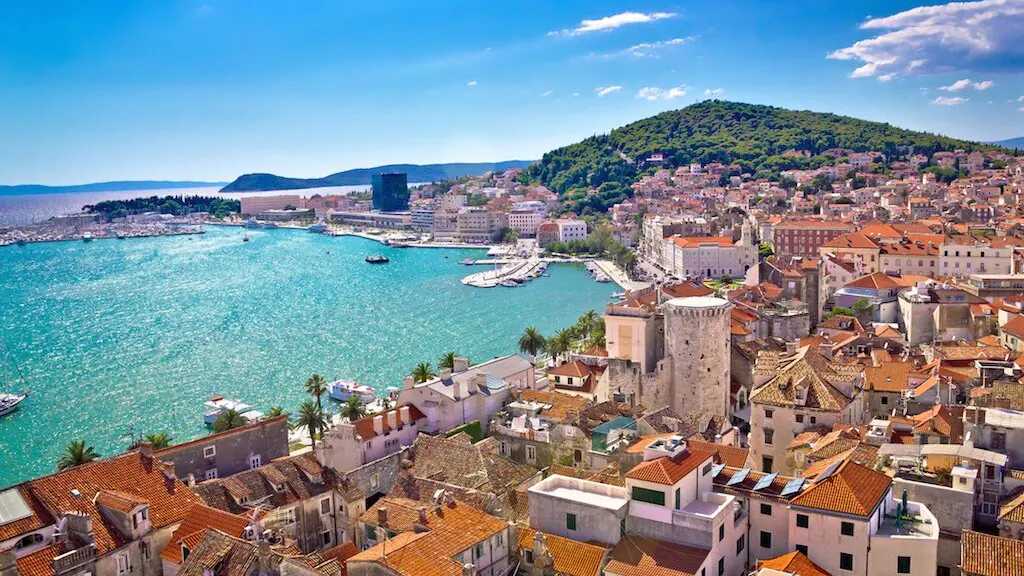
If you want the atmosphere and you're here for one or two nights, stay inside or immediately around Diocletian's Palace and accept some noise. If you want the best balance of everything - central, quiet, characterful, walkable, stay in Veli Varoš, the old fishermen's quarter just west of the palace. If you're travelling with children or you want to swim every morning, stay at Bačvice or Firule. If you have a rent a car, do not stay inside the walls; go to Meje, Žnjan or Split 3, where parking exists.
Whatever you pick, everything in this city is closer than it looks on a map. The entire historic centre is about a fifteen-minute walk end to end. What isn't close is the coast west of Marjan and the viewpoints above it, it is a separate problem and we covered it in places in Split you can't easily reach on foot.
- One or two nights, first visit: Old Town or the streets just outside it
- Best all-round choice: Veli Varoš
- Beach every morning, or kids: Bačvice, Firule, Zenta
- Hire car: Meje, Žnjan, Split 3 or Spinut
Split Is an Apartment City, Not a Hotel City
The first thing to understand is that most people who visit Split do not stay in a hotel. The centre has very few of them, because you can't easily build a hotel inside a protected Roman monument, and the ones that exist are small and expensive. What Split has instead is thousands of private apartments and rooms, often two or three in a family's own building, frequently with the owner living upstairs.
That's mostly good news: apartments here are generally clean, well equipped and better value than a hotel room of the same price anywhere else in Croatia. But it changes what you need to check before booking. There's usually no reception, no lift, no porter and no room service, and check-in is arranged by phone with somebody who may be twenty minutes away. Message the host about your arrival time before you come, not when you land.
Inside Diocletian's Palace: What It's Really Like to Sleep In
Waking up inside a Roman palace is a genuinely extraordinary thing, and for a short stay it can be worth every compromise. You step out of the door into lanes that are empty and cool at six/seven in the morning, the cathedral and the Peristyle are ninety seconds away, and you get the version of the Old Town that day visitors never see, before ten and after ten.
Many buildings are protected, which limits what owners can do about windows and air conditioning, and a lot of rooms face an internal lane rather than the sky. Cars can't come in, so you'll be wheeling luggage over polished limestone and, in a lot of buildings, carrying it up a narrow staircase.
Our honest position: brilliant for one or two nights, brilliant for people who sleep through anything, and a bad idea for light sleepers, for anyone with a lot of luggage or mobility issues, and for a week-long stay in July.
- Unbeatable early mornings and late nights inside the walls
- Bar noise until 2am or later, deliveries from about 6am
- No car access, cobbles and stairs with luggage
- Ask the host directly: which way do the windows face, and is there air conditioning
Veli Varoš: The One We'd Book
Veli Varoš is the old fishermen's quarter that climbs the slope between the Riva and Marjan, immediately west of the palace, and it's the answer for most people. Low stone houses, steep alleys, green shutters, cats, laundry, tiny squares with a church.
It's also where a good number of the city's best konobas are, which matters more than it sounds - the whole argument in our Split food guide is to walk two or three streets back from the sea, and in Veli Varoš you're already there. The trade-off is the hill: these are proper steps, not a gentle incline, and in August with a suitcase they're a workout. Look at where the listing actually sits on the map before you book, because the difference between the bottom of Veli Varoš and the top is a hundred stairs.
- Five to ten minutes from the Old Town and from the sea
- Quiet at night, but still walkable to everything
- The best concentration of proper konobas in the centre
- Steep steps: check the exact position on the map first
Bačvice, Firule and Zenta: Wake Up by the Water
East of the centre, past the ferry port, the coast turns into a run of small sandy and pebble bays: Bačvice first, then Ovčice, Firule and Zenta. Bačvice is Split's city beach, the shallow sandy one where locals have played picigin for over a century, and it's a ten to fifteen minute flat walk from the palace. Firule and Zenta are quieter and more residential, five to ten minutes further on.
This is the best area for families and for anyone whose ideal morning starts in the sea. Apartments are newer, bigger and cheaper than the equivalent in the centre, streets are normal streets with normal parking, and you can walk into town for dinner. One thing to know: Bačvice has a cluster of late-night bars and clubs in the pavilion right on the beach, so the immediate seafront can be loud on summer weekends. A block or two back solves it entirely. More on the water itself in our guide to the best beaches in Split, and the family angle in things to do in Split with kids.
- Ten to fifteen minutes on the flat into the Old Town
- Swim before breakfast, better value, more space
- Bačvice seafront is a nightlife spot: sleep one street back
- The obvious pick for families with small children
Manuš, Lučac and Radunica: Local, and Two Minutes from Everything
Directly east and north-east of the palace walls, in the streets around the Pazar market and up the slope of Lučac, is the quarter most visitors walk past without registering. Radunica is one of the oldest streets in the city, Manuš is a handful of quiet blocks behind the Golden Gate, and both are a genuine two-minute walk from the Roman centre while being entirely residential.
You get the location of the Old Town without the bar noise, at a price that's usually noticeably lower, and you're around the corner from the green market for breakfast. It's what we'd suggest to somebody on a second visit, or to anyone who liked the sound of the palace but read the section above and thought better of it. There are more corners like this in hidden gems in Split.
Meje and the West: Quiet, Green, and Near the Best Swimming
Meje is the leafy villa district on the southern flank of Marjan, west of Veli Varoš, running out towards Kašjuni. It's the most peaceful place to stay in the city and the closest to the good swimming - Kašjuni and the coves along the Marjan shore are far nicer than anything in town, and it's the right base if the point of your holiday is pine trees, sea and a book.
Be clear-eyed about the distance, though. From central Meje it's a twenty to thirty minute walk into the Old Town, mostly pleasant and along the water, and there are very few shops or restaurants once you're up there. It works beautifully with a car or a scooter and slightly less well without one. If you want to know what's up the hill above you, our Marjan Hill guide covers the whole park.
Žnjan, Split 3 and Spinut: Space, Parking and Lower Prices
Further east along the coast, Žnjan has been rebuilt in recent years into a long promenade with beaches, and the apartments behind it are modern, large and considerably cheaper than the centre. Split 3 is the residential grid inland from it. Spinut sits on the north side of Marjan by the marina and the Poljud stadium.
All three are places where actual Split residents live, which means parking, supermarkets, bakeries and normal prices, and all three are twenty-five to forty minutes from the Old Town on foot or ten by bus. That's a reasonable trade if you're here for a week, travelling as a family, or driving. It's a poor trade if you're here for two nights and want to walk home from dinner. Bus routes and ticket prices are covered in how to get around Split.
- Best value per square metre anywhere in the city
- Street parking that actually exists
- Ten minutes by bus, twenty-five to forty on foot
- Best for a week or more, or with a car and children
The Parking Question, Which Decides More Than People Expect
If you're picking up a rent a car, decide where you're staying around the car, not the other way round. The historic core is closed to traffic, the streets immediately around it are metered and full from May to September, and public garages in the centre charge a daily rate that adds up fast over a week. Plenty of visitors end up paying more to store the car than they save on the apartment.
Two sensible approaches. Either stay somewhere with a private parking space - which in practice means Meje, Žnjan, Split 3, Spinut or further out - and drive in and out. Or don't rent the car for the city days at all: collect it on the morning you leave for Krka or the coast road, and drop it at the airport when you go. Inside Split itself a car is a liability rather than a convenience.
- "Free parking" in a listing may mean a shared space, not a guaranteed one
- Ask the host for the exact parking arrangement in writing
- Old Town addresses: the taxi stops at the edge and you walk in
- Consider renting the car only for the days you leave the city
What to Check Before You Book
Five questions save almost every bad Split booking, and none of them are about the apartment itself. How many steps are there, from the street to the door and inside the building? Which direction do the bedroom windows face, and is there a bar, a terrace or a delivery lane beneath them? Is there air conditioning in the bedroom specifically, rather than only in the living room? Is the parking a real, reserved space? And how does check-in work if you arrive at eleven at night?
The other thing worth doing is finding the exact pin on a map rather than trusting the neighbourhood label. "Old Town" in a listing can mean the Peristyle or it can mean a twenty-minute walk away, and "sea view" occasionally means a stripe of blue visible from one corner of the terrace. Hosts here answer messages quickly and honestly; ask.
- Number of steps, street to bed
- Which way the bedroom faces, and what's below it
- Air conditioning in the bedroom, not just the living room
- Exact map pin, not the neighbourhood name
When to Book, and Roughly What It Costs
July and August is when the city sells out, and the good apartments in the centre go months ahead rather than weeks. If you're coming in high summer, book accommodation before you book anything else, including tours and ferries. June and September are far easier and, in our opinion, better trips anyway, the reasoning is laid out in the best time to visit Split.
As a rough shape rather than a promise: a double room or small apartment in the shoulder season is a fraction of what the same place costs in the first half of August, and prices in the centre carry a premium of roughly a third over the equivalent twenty minutes away. There's also a small nightly tourist tax per person, usually collected in cash by the host on arrival and often not included in the online price, so keep a few euros handy.
- High summer in the centre: book months, not weeks, ahead
- June and September: cheaper, cooler, still swimming weather
- A nightly tourist tax is usually collected in cash on arrival
- Ask whether the final cleaning fee is already in the price
Should You Stay Outside Split?
Trogir, Kaštela, Podstrana and Omiš all get suggested as cheaper bases, and they're all lovely places. The catch is the commute. Anything outside the city means a bus or a drive each time you want dinner in the Old Town, and the road along the coast in August is not quick. If your holiday is mostly beach and boat, and you have a car, staying out of town can genuinely be better. If your holiday is Split, stay in Split.
One specific exception: if you have a very early flight, a night near the airport at Kaštela or in Trogir on your last evening is a sensible move, since the airport is about twenty-five kilometres west of the city. If it is the other way round, an early checkout and a late flight, our few hours in Split guide shows what fits in the gap and where to leave the bags.
Wherever You Stay, You'll Still Need to Get Out of the Centre
Here's the thing that ties all of this together. Whichever neighbourhood you choose, the parts of Split that people photograph and remember — the Marjan lookouts, Sustipan, the western coves, the coastal road — are spread across a peninsula, uphill, and thirty to fifty minutes apart on foot in the heat. That's true from a palace apartment and it's true from Žnjan.
Which is exactly the gap our retro tuk tuk tours fill: in an hour or two you link the viewpoints and the coast that would otherwise cost you a whole afternoon of walking, and you arrive back where you started. The Classic Tour is the usual choice on a first day, since it also gives you your bearings for the rest of the week, and if there's a specific corner of the city near your apartment you want to see, tell us and we'll build the route around it.