Split in Autumn: September, October and the Best Weeks of the Year
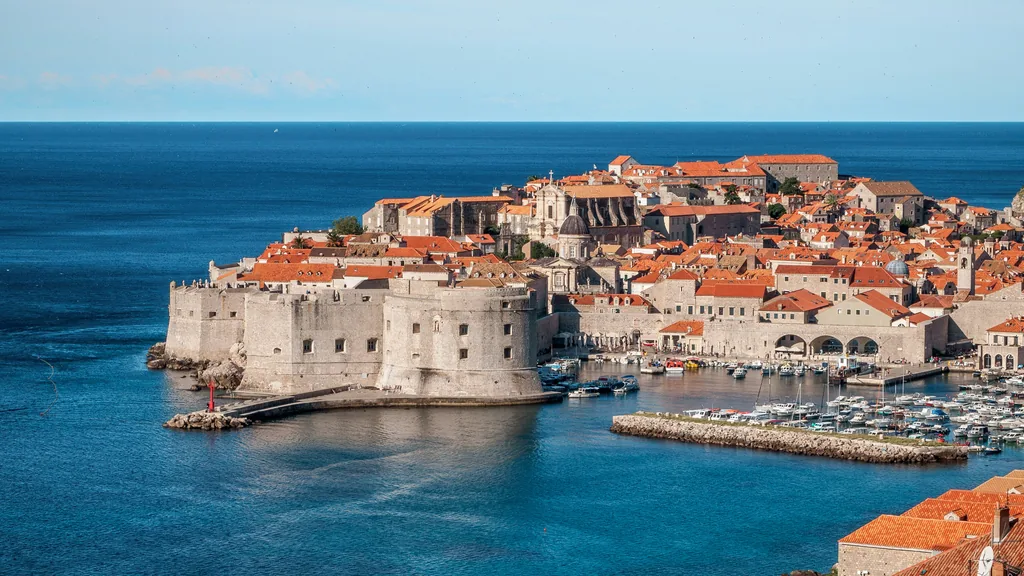
Ask anybody who lives in Split when they would come and almost none of them will say August. They will say the second half of September, and then they will argue about October. This is the part of the year the city keeps for itself: the sea is still warm, the stone has stopped radiating heat at ten at night, the ferries are quieter, the restaurants have tables, and the light in the last hour of the day does something to this coast that it does not do in July. It is not perfect, and this article is honest about the parts that are not. But if your dates are flexible and you have been assuming Croatia means summer, here is what September, October and November are actually like, week by week, and what changes as the season turns.
By Lovre Ostojić
The Short Answer
The second half of September is the best fortnight of the year in Split and we would take it over any week in July or August. The sea is at its warmest of the whole year, the air has come down to something you can walk in, and the crowds have gone home with the school holidays.
The first half of October is the quiet secret. Still swimmable, still warm in the afternoon, prices noticeably lower, and you get the city back. From about the middle of the month it becomes a gamble on the weather, which some people enjoy.
November is a city break rather than a beach holiday and it can be beautiful, but come for the food, the stone and the sea air rather than for swimming.
If you want the fuller picture across the whole calendar, our best time to visit Split covers every month. This one goes deeper on the three that we think are underrated.
- Late September is the best fortnight of the year here, with no real rival
- Early October is still swimmable, much cheaper and much quieter
- From mid October the weather becomes a genuine gamble
- November is a city break, and a good one, but not a beach one
September, Week by Week
The first week of September still feels like summer, because it is. The schools have gone back across most of Europe so the beaches thin out immediately, but the temperature has not moved much and the sea is at its peak. The city is still fully open and still busy, just no longer overwhelmed.
The second week is when it tips. Somewhere around the tenth the evenings start needing a layer, the Riva at eight at night is more locals than visitors again, and restaurants that would not seat you in August will find you a table.
The third and fourth weeks are the ones we would book. Warm afternoons, comfortable mornings, the sea still holding its summer temperature, the queues gone from the palace cellars, and the hill walkable in the middle of the day, which it simply is not in August. If somebody asked us for one week of the year in Split with no other constraints, it would be this one.
- First week: still summer, minus the school holiday crowds
- Around the tenth the evenings start wanting a light layer
- The last fortnight is the best of the year, warm days and no queues
- Marjan is walkable at midday again, which it is not in August
October, and the Day the City Changes
The first half of October is a continuation of late September with a little more risk attached. Warm afternoons, cool mornings, the sea still comfortably swimmable for most people, and prices that have dropped properly rather than symbolically.
Then the clocks go back on the last Sunday of the month and the whole rhythm of the city changes in a single evening. Sunset moves from early evening to late afternoon, the waterfront empties an hour earlier, and everything after that happens indoors and in lamplight. It is not worse, it is just a different holiday, and people who arrive on the Saturday and wake up on the Sunday are often surprised by it.
October is also when the rain arrives. Autumn is the wet season on this coast rather than winter, and the pattern is typically a few days of heavy rain followed by a run of clear, washed, brilliant days. A wet week in October is possible. So is the best week of the year. That is the trade you are making and it is a real one.
- First half: warm afternoons, cool mornings, real price drops
- The clocks go back on the last Sunday and the evenings collapse
- Autumn is the wet season here, not winter
- Rain comes in bursts, and the clear days after it are the best of all
November, Honestly
November in Split is a city that has gone back to work. The tourist restaurants on the waterfront start closing, the ones locals use stay open and get better, the market is full of seasonal produce, and you can walk through the palace at eleven in the morning and hear your own footsteps.
It is the wettest and greyest stretch of the year and it is also, on its good days, extraordinary. Cold clear light on wet limestone, nobody on the Riva, the islands sharp on the horizon because the air has been scoured clean by the wind. If you like cities in the off season, Split is a very good one, because it is a real place that does not shut down when the visitors leave.
What we would not do is come in November expecting the holiday in the photographs. No swimming for most people, short afternoons, a genuine chance of three wet days in a row, and some boat operators closed until spring. Come for the food, the stone, the quiet and the sea air.
- The city goes back to being a city, and it is good at it
- The tourist restaurants close, the local ones get better
- Genuinely the wettest month, with short afternoons
- Superb for a quiet city break, wrong for a beach holiday
The Sea Stays Warm Long After the Air Does Not
This is the fact that changes most people's plans and almost nobody knows it before they arrive. The Adriatic takes all summer to heat up and then holds that heat well into autumn, so the warmest sea of the entire year here is in late August and September, not in June.
In September the water is at its peak and swimming is simply summer swimming. In October it cools gradually and stays comfortable for most swimmers through the first half, then becomes a decision rather than an obvious yes. By November it is cold enough that the people in it are locals and the properly committed.
The thing to understand is that the air is what stops you, not the water. An October swim is easy in the sun at two in the afternoon and unpleasant at six when the light has gone and there is a wind. So swim in the middle of the day in autumn, which is the opposite of the August rule, and take a towel bigger than you would in summer. Our beaches guide covers which of them hold the afternoon sun longest, and in autumn that is the thing that matters most.
- The warmest sea of the year is in late summer and early autumn
- September swimming is straightforwardly summer swimming
- October is comfortable through the first half, then a decision
- Swim at midday in autumn, not at six, the air is what stops you
What Actually Closes
Less than people fear, and it happens gradually rather than on a date. Through September essentially everything is open. Through October the seasonal beach bars wind down, some of the boat trip operators stop running, and a few restaurants that exist purely for the summer close for the winter.
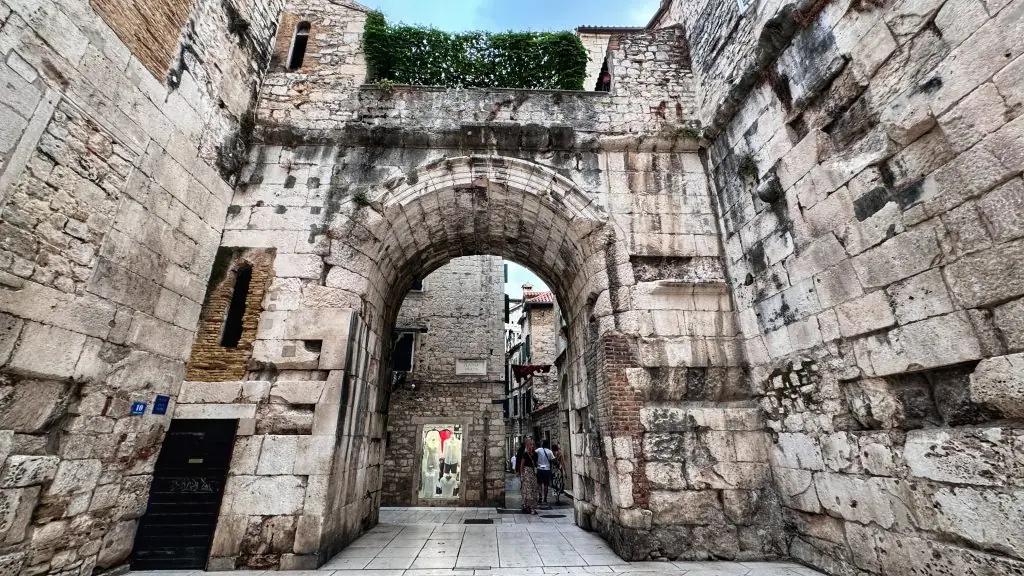
The things that do not close are the things that make Split worth visiting. The palace is a neighbourhood and its streets are public, so it is open in the same sense that a street is open. The cathedral, the bell tower, the cellars, the galleries and the museums all run year round with shorter winter hours. The green market and the fish market operate every morning of the year, and both are better in autumn than in summer. Marjan does not close.
The one genuine change is the boats. Excursion operators wind down through October and many stop entirely by the end of it, so if an island day is the point of your trip, come in September or check directly rather than assuming.
- September: effectively everything is open
- October: beach bars and boat operators wind down gradually
- The palace, the markets, the museums and Marjan run all year
- If an island boat day matters to you, come in September
Ferries and the Islands After the Season
Split is the ferry capital of the Adriatic in every month, because the islands have people living on them who need to get to a hospital and a supermarket. The car ferries to Hvar, Brač, Šolta, Vis and Korčula run all year.
What changes is the frequency and the fast catamarans. The summer timetable switches to the winter one in autumn, sailings thin out, some of the seasonal fast routes stop altogether, and the practical consequence is that a day trip which was easy in August becomes a trip that needs planning, or occasionally an overnight.
So islands in autumn are absolutely possible and they are wonderful, with Hvar town in October being a different and much better place than Hvar town in July. Just check the timetable for your actual dates before you build a day around it, and never assume the last boat back is as late as it was in summer. That is the single most common autumn mistake here. Our day trips guide covers the destinations, and in autumn the timetable matters more than the destination.
- Car ferries to the main islands run all year, they always have
- The winter timetable thins the sailings and cuts seasonal fast routes
- Hvar in October is a far better place than Hvar in July
- Check the last boat back for your dates, it is earlier than you think
The Bura and the Jugo
Two winds shape autumn here and it is worth knowing their names, because everybody will use them and nobody will translate.
The bura comes down off the mountains from the northeast, cold, dry and sudden. It drops the temperature, flattens the humidity and leaves behind the clearest air of the year, which is why the best photographs of this coast are almost always taken the day after one. It can also stop or delay ferries, so if a bura is forecast and you have an island booked, have a second plan.
The jugo comes from the southeast, warm, wet and heavy, and it brings the rain. It is the one locals complain about, because it arrives with grey low cloud and a swell and it makes everybody irritable, which is a genuine cultural fact here rather than a joke. It also passes. A jugo day in October is a day for the cellars, a long lunch and a museum, and the day after it is often the best day of your trip.
- Bura: cold, dry, from the northeast, and it clears the air completely
- A bura can delay ferries, so have a second plan for island days
- Jugo: warm, wet, from the southeast, and it brings the grey
- The day after either of them is usually the best day of the week
What It Costs, and How Much Less
The price difference between August and October in Split is real and it is largest where the numbers are biggest, which is accommodation. Apartments and hotels drop substantially once the season breaks, and the same flat that was impossible to book in August is available and noticeably cheaper in October.
Flights follow the same curve and fall away through autumn, though the number of direct routes into Split also drops as airlines move to winter schedules, so book earlier than you would for a summer trip even though the fare is lower.
Restaurants and cafés mostly do not change their prices, because they are not the part that was inflated. What changes is that you can get a table, that the service is unhurried, and that the person serving you has the time to tell you what is actually good that week. Tours and excursions vary, and the useful thing about autumn is not usually a discount, it is that a tour with six people on it instead of twenty five is a better tour for the same money.
- Accommodation is where the real saving is, and it is substantial
- Flights are cheaper but there are fewer routes, so book ahead anyway
- Restaurant prices barely move, but you can get a table
- The autumn value is smaller groups rather than lower ticket prices
The Light
This is the part that is hard to sell and impossible to forget. The sun sits lower from September onwards, so it comes in sideways instead of straight down, and Split is a city built entirely out of pale limestone that has been polished by seventeen hundred years of hands and feet. Low sun on that stone is the whole reason the city photographs the way it does.
In July the good light lasts about twenty minutes and everything in the middle of the day is bleached flat. In October the last two hours of the afternoon are all usable, the shadows in the palace lanes are long and deep, and the west facing coast under Marjan holds gold light while the city behind it has already gone into shade.
If you take photographs at all, this is the reason to come now. And if you want the whole thing without hunting for the spots, the ridge above the city is where it happens. Our viewpoints guide lists them, and the short version is that everything good faces west.
- Low autumn sun on pale limestone is what makes Split photograph
- The last two hours of an October afternoon are all usable light
- The palace lanes get long deep shadows that July never gives you
- Everything worth photographing here faces west
Sunset Times, and Why They Matter More Now
In summer nobody plans around sunset because it comes at half past eight and the evening is long enough to absorb a mistake. In autumn the light becomes the scarce thing and you have to work backwards from it.
Roughly, and check the exact time for your date because it moves quickly: the sun goes down in the early evening at the start of September and is losing a couple of minutes a day all month. By the end of October, once the clocks have gone back, the afternoon ends much earlier than visitors expect and the evening starts in the dark.
The practical rule is the same one we give people planning a celebration. Find the sunset time for your date first, be somewhere high forty minutes before it, and book dinner for after the light has gone rather than through it. In September and October that single decision is the difference between a good evening and an ordinary one. Our celebrations guide goes through it properly, and if you would rather have the timing handled, the Romantic Night Ride is built around exactly this hour.
- Sunset moves fast in September, a couple of minutes a day
- After the October clock change the afternoon ends abruptly
- Be somewhere high forty minutes before sunset, not at it
- Book dinner for after the light has gone, not through it
What to Pack
September is a summer wardrobe with one extra layer for the evening. You will swim, you will want shorts in the afternoon, and you will be glad of long sleeves after nine at night.
October needs proper layers, because the gap between a sunny afternoon and a windy evening is large. Bring something waterproof rather than an umbrella, since the jugo comes with wind and an umbrella is no use in it. November needs a real jacket.
The one thing people get wrong in every month here is shoes. The old town is polished limestone worn smooth by centuries, and wet polished limestone is genuinely slippery, which matters much more in autumn than in summer. Bring something with a grip on the sole. The same applies on Marjan, where the paths have loose stone underneath the pines. And bring the swimming things whatever month you are coming in, because an unexpectedly warm October afternoon is a bad time to be without them.
Our things to know before visiting Split covers the rest of the practical ground.
- September: summer clothes plus one layer for the evening
- October: proper layers and something waterproof, not an umbrella
- Shoes with grip, because wet polished limestone is slippery
- Bring swimming things even in October, you may well want them
Hajduk, Wine and the Local Calendar
Autumn is when Split stops performing and goes back to its own calendar, and that is most of the appeal. The football season is in full swing, which means Hajduk are playing at Poljud every other week, and a home game changes the mood of the entire city for the day. The singing from the north stand carries a long way across town. If you have any interest at all, go, because it is the most Split thing you can do.
It is also harvest season inland, which is when the wine from the surrounding hills and the islands turns up young and rough and cheap, and when the food in the konobas shifts from grilled fish to the slower things, the stews and the peka and the game.
There are festivals and concerts through the autumn as well, and the practical advice is the same as in summer: check what is on for your dates before you plan an evening around a quiet restaurant, and check for a Hajduk home game before you plan anything involving a car near Poljud.
- Hajduk are at home every other week and it changes the whole city
- Harvest season, so the young wine appears and it is cheap
- The food moves from grilled fish to peka, stews and slower cooking
- Check for a home game before planning anything with a car
Autumn With Children, and With Parents
For families, the second half of September is better than any week of the summer and it is not close. The sea is at its warmest, the beaches have space, the queues have gone, and nobody has to be dragged around a hot stone city at two in the afternoon. The only reason people do not come then is school, which is fair enough and is also why it is so quiet. Our guide to Split with children works in any month, and works best in this one.
For older travellers and for anybody who does not do well in heat, autumn is the answer to the whole question. August in Split is genuinely hard on people who cannot manage thirty five degrees and a hill, and September and October remove that problem completely while keeping everything that is good about the city.
If mobility is part of the picture, the surfaces do not change with the season but the wet stone does, so our access guide is worth a read before you come in autumn specifically.
- Late September is the best family fortnight of the year here
- Warmest sea, empty beaches, no queues, no midday heat
- Autumn removes the single biggest problem for older travellers
- Wet limestone is slippery, so autumn needs better shoes than August
What Autumn Is Not Good For
We would rather say this plainly than have somebody arrive disappointed. Autumn is not the season for a guaranteed beach holiday. If you have seven fixed days and the entire point is lying in the sun, come in summer, because one wet week in October is entirely possible and there is no way to insure against it.
It is not the season for nightlife at full volume either. Split has a proper night out in summer, with beach clubs and open air bars that simply do not exist in November. By late autumn the evening is bars and restaurants, which is lovely and is not the same thing.
And it is not the season for spontaneous island hopping, because the timetable thins and the fast routes go. Islands in autumn need a plan, and plans are the thing people come on holiday to avoid.
If any of those three is the point of your trip, come in summer instead and we will see you then.
- Not for a guaranteed beach week, the weather is a real gamble
- Not for full volume nightlife, the summer venues close
- Not for spontaneous island hopping, the timetable thins out
- If any of those is the point of your trip, come in summer
What We Would Tell a Friend
Come in the last ten days of September. Swim every day, because the sea is warmer than it was in June and almost nobody believes that until they are in it. Eat late. Walk up Marjan in the middle of the day, which you cannot do in August without suffering, and be on the ridge for the last hour of light with something to drink.
If those dates are impossible, take the first half of October and accept the gamble, because the upside is a version of this city that people who come in summer never get to see: warm, unhurried, gold in the afternoon, and full of people who live here.
And if you do come, do the thing that autumn is uniquely good for, which is being high up when the sun goes down. Walk if the weather is kind. Ride up with us if it is not, or if you would rather not do the several hundred steps twice. The view from that ridge in October, with the air scoured clean by a bura and the islands sharp all the way to the horizon, is the single best hour this city has, and hardly anybody is standing there to see it.
- The last ten days of September, if you can have them
- Swim daily, the sea is warmer now than it was in June
- Walk Marjan at midday, which August does not allow
- Be on the ridge for the last hour of light, that is the whole trip